If you’ve ever shipped a parcel, booked a courier service, or sold products online, you’ve probably encountered the term AWB.
Yet many first-time senders and online sellers are unsure what an AWB actually is, why it’s important, and how it affects the shipping process.
Whether you’re sending a single parcel or managing hundreds of shipments every month, understanding how an Air Waybill works can help you reduce shipping errors, improve tracking visibility, and ensure successful deliveries.
In this guide, we’ll explain everything you need to know about AWBs.
What Is an AWB?
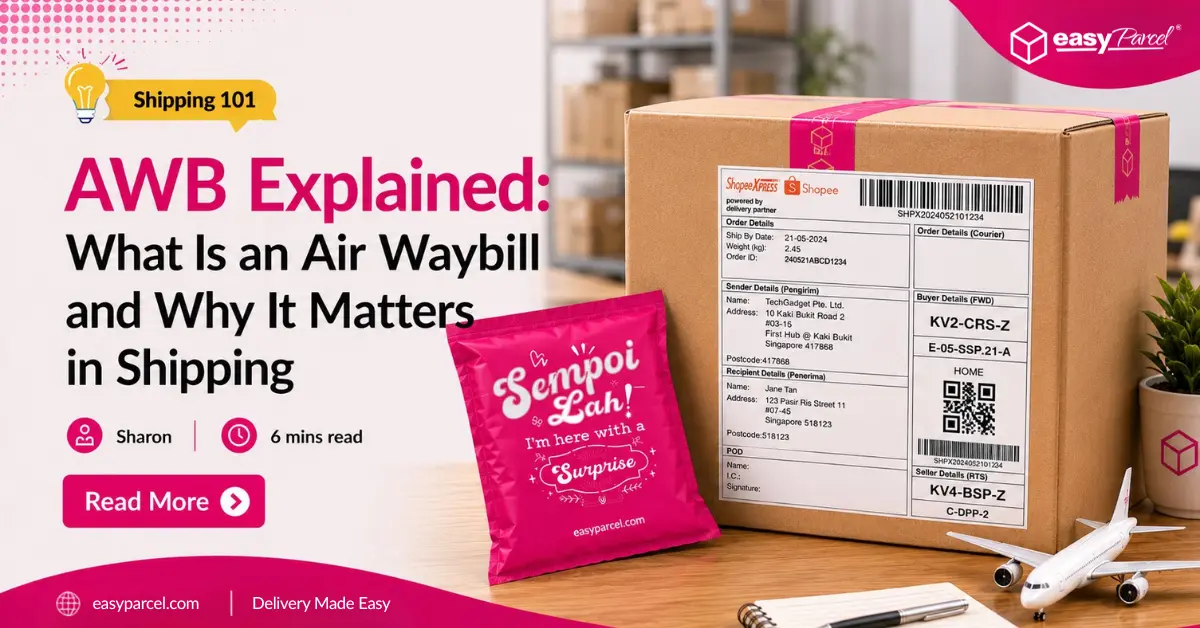
An AWB (Air Waybill) is a shipping document issued by a courier or logistics provider that contains shipment details such as sender information, recipient information, parcel contents, routing details, and tracking numbers.
The AWB travels together with the shipment throughout its delivery journey and acts as the shipment’s official identification document.
Every parcel booked through a courier service is typically assigned a unique AWB number.
What Does AWB Stand For?
AWB stands for:
Air Waybill
Historically, Air Waybills were used specifically for air cargo shipments.
Today, many courier companies still use the term AWB even when shipments travel through multiple transportation methods, including:
- Air transport
- Ground transport
- Cross-border logistics networks
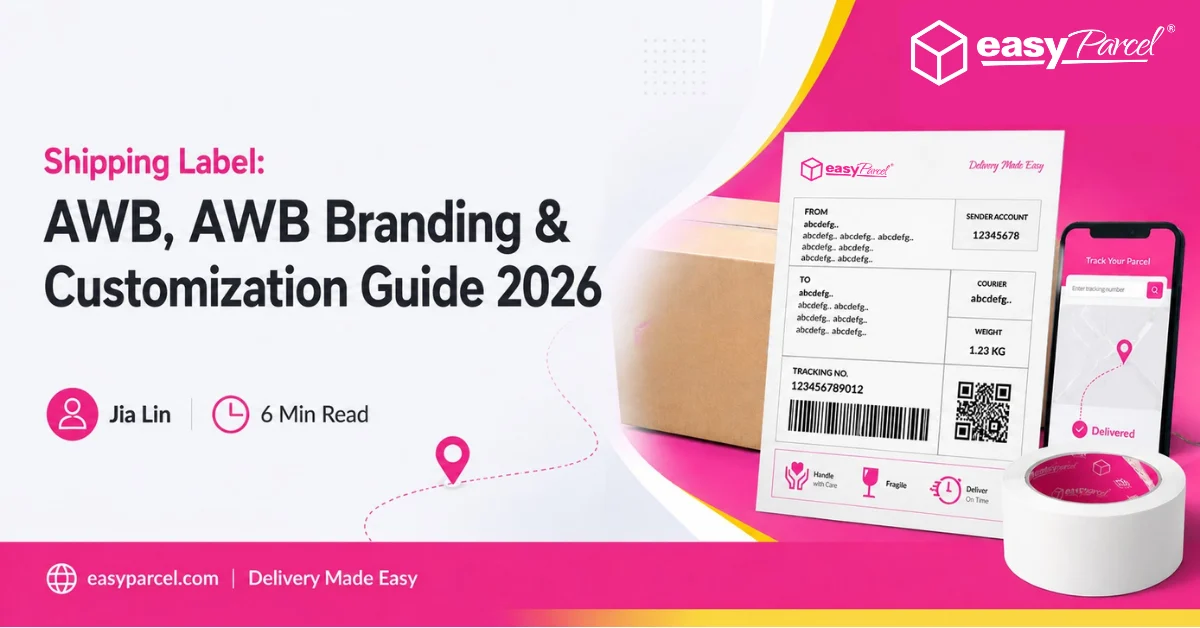
In courier shipping, AWB often refers to the shipping label attached to the parcel.
Why Is an AWB Important?
Without an AWB, a courier cannot properly identify, process, or deliver a shipment.
An AWB helps:
Identify the Shipment
Each shipment receives a unique reference number.
Route the Parcel Correctly
Sorting facilities use AWB information to determine where parcels should go.
Enable Shipment Tracking
Tracking updates are linked to the AWB number.
Support Customs Clearance
For international shipments, customs authorities may use information provided on the AWB.
Confirm Shipment Details
The AWB acts as an official shipping record.
What Information Is Found on an AWB?

Sender Information
- Name
- Address
- Contact number
Recipient Information
- Name
- Delivery address
- Contact number
Shipment Details
- Parcel weight
- Dimensions
- Number of packages
Item Information
- Description of goods
- Declared value
- Quantity
Courier Information
- Courier name
- Service type
Tracking Information
- AWB number
- Barcode
- QR code (if applicable)
AWB Number vs Tracking Number
Many people assume they are different.
In most courier services:
AWB Number = Tracking Number
The AWB number is usually the same reference used for shipment tracking.
For example: TRX123456789SG
This number can typically be entered into a tracking system to check shipment status.
How to Read an AWB
Although AWB layouts vary between courier companies, most contain similar sections.
Typical AWB structure:
| Section | Purpose |
|---|---|
| Sender Details | Who shipped the parcel |
| Recipient Details | Delivery destination |
| Tracking Number | Shipment identification |
| Weight & Dimensions | Parcel specifications |
| Courier Service | Shipping method selected |
| Barcode | Automated shipment scanning |
| Item Description | Contents declaration |
Understanding these fields helps reduce shipping mistakes.
AWB vs Shipping Label: Are They the Same?
This is one of the most common questions among online sellers.
AWB
Contains shipping and shipment identification information.
Shipping Label
Refers to the physical label attached to the parcel.
In practice, courier companies often combine both into a single document.
This is why many people use the terms interchangeably.
How Is an AWB Generated?
When a shipment is booked, the shipping platform automatically generates the AWB.
For example, when using EasyParcel:
- Enter shipment details.
- Compare courier services.
- Confirm booking.
- AWB is generated automatically.
- Print and attach to parcel.
The AWB becomes the official shipment reference throughout the delivery journey.
Generate Your AWB Online in Minutes
Book shipments, compare courier services, and instantly generate Air Waybills (AWBs) for local and international deliveries.

How Online Sellers Use AWBs
AWBs are particularly important for eCommerce businesses.
Every order shipped requires:
- Shipment identification
- Tracking information
- Delivery routing
- Courier processing
Without a proper AWB, order fulfilment becomes difficult to manage.
This is why online sellers often automate AWB generation through shipping platforms.
Common AWB Mistakes to Avoid
Incorrect Recipient Address
The most common cause of delivery issues.
Wrong Contact Number
May prevent successful delivery attempts.
Inaccurate Weight Information
Can result in shipment adjustments or additional charges.
Missing Item Description
May delay customs clearance for international shipments.
Poor Label Placement
Barcodes should remain visible and scannable.
How to Track an AWB Number
Once your shipment has been collected:
- Obtain the AWB number.
- Enter it into a tracking system.
- View shipment progress.
Tracking updates may include:
- Parcel collected
- In transit
- Customs clearance
- Out for delivery
- Delivered
For EasyParcel users, shipments can be tracked through EasyTrack which supports tracking across multiple courier providers.
AWB Format Choices Available on EasyParcel
To accommodate different printing needs, EasyParcel allows users to select the AWB size format as follows:
A4 (Default)
Standard full page size for detailed AWBs, ideal for laser printers.
A5 (210mm x 148mm)
Half of A4 size, convenient for smaller printers or less paper consumption.
A6 (148mm x 105mm)
Compact size, perfect for thermal printers and sticker AWB labels, enabling quicker parcel labeling and packing. This flexibility ensures you can efficiently print AWBs that best fit your packaging and shipping workflow.
Final Thought
An AWB is one of the most important documents in shipping. It acts as a shipment’s identity, tracking reference, routing instruction, and delivery record.
Whether you’re sending a personal parcel or managing hundreds of online orders, understanding how Air Waybills work can help improve shipping accuracy and efficiency.
By using platforms like EasyParcel, senders and businesses can generate AWBs automatically, compare courier services, and track shipments more easily.