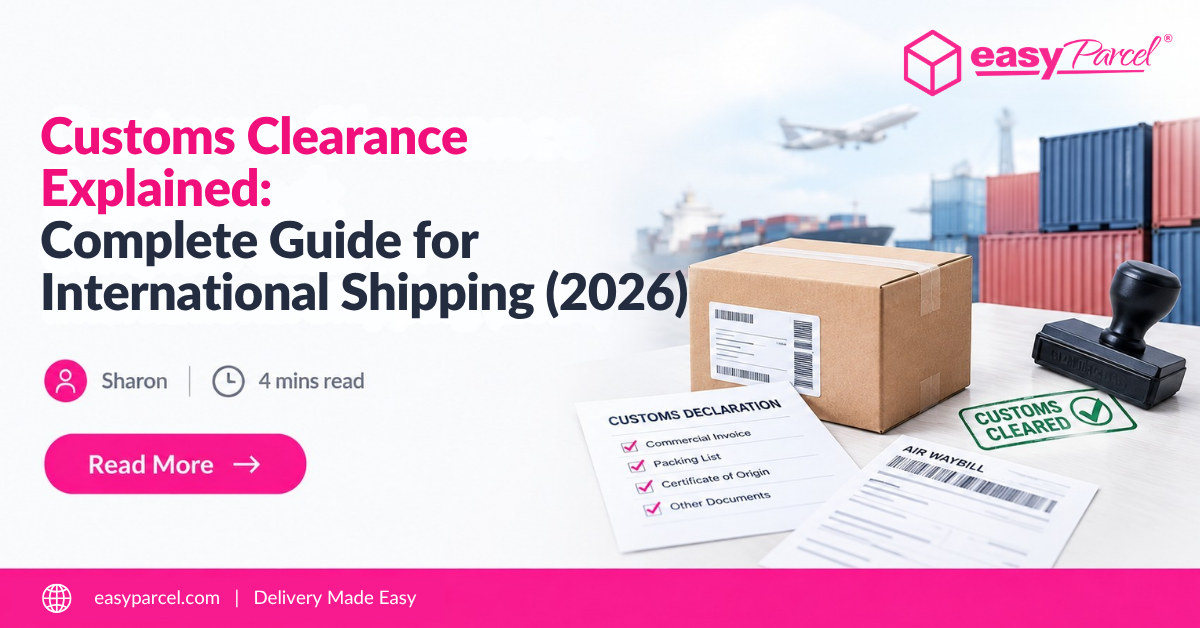
When shipping goods internationally, one of the most important steps is customs clearance. Whether you’re sending personal belongings, business products or eCommerce orders, every international shipment must go through customs before it can enter or leave a country.
Many people worry when they see a tracking status such as “Held at Customs” or “Pending Customs Clearance“, but in most cases, customs clearance is simply a standard part of the international shipping process.
Understanding how customs clearance works can help you avoid unnecessary delays, unexpected charges and rejected shipments.
In this guide, we’ll explain everything you need to know about customs clearance—from the required documents and customs duties to common reasons shipments get delayed and how you can prepare your parcel for a smoother clearance process.
Table of Contents
What Is Customs Clearance?
Customs clearance is the official process of declaring goods to the customs authority when they enter or leave a country.
During this process, customs officers review the shipment to ensure it complies with the country’s import and export regulations.
This may include:
- Checking shipping documents
- Verifying the declared value of the goods
- Reviewing the product description
- Assessing duties and taxes
- Inspecting restricted or prohibited items
- Confirming compliance with import regulations
Once customs clearance is completed, the shipment can continue to its final destination.
How Does Customs Clearance Work?
Although procedures differ slightly between countries, the customs clearance process generally follows these steps.
Step 1: Shipment Arrives at Customs
Step 2: Customs Documents Are Reviewed
Customs officers verify the shipment information, including:
- Commercial Invoice
- Packing List (if required)
- Air Waybill (AWB)
- Customs declaration
- Product description
- Declared shipment value
Step 3: Duties & Taxes Are Assessed
Depending on the destination country’s regulations, customs may calculate:
- Import duties
- Goods & Services Tax (GST)
- Value Added Tax (VAT)
- Other applicable import charges
Step 4: Customs Inspection (If Required)
Some shipments are randomly selected for inspection.
Customs may also inspect shipments if:
- Information is incomplete.
- The declared value appears inaccurate.
- Restricted goods are involved.
- Additional documentation is required.
Step 5: Shipment Is Released
After customs requirements are fulfilled and any applicable duties or taxes are paid, the shipment is released to the courier for final delivery.
Why Is Customs Clearance Important?
Customs clearance helps governments:
- Protect national security.
- Prevent illegal imports.
- Collect import duties and taxes.
- Ensure product safety.
- Enforce trade regulations.
- Prevent counterfeit goods.
Without customs clearance, international shipments cannot legally enter most countries.
What Documents Are Required for Customs Clearance?
The required documents vary depending on the shipment type and destination, but commonly include:
| Document | Purpose |
|---|---|
| Commercial Invoice | Declares the shipment’s value, product details and seller/buyer information. |
| Air Waybill (AWB) | Identifies the shipment and courier handling the delivery. |
| Packing List | Lists the contents, quantity and packaging details of the shipment. |
| Import/Export Permits | Required for controlled or regulated goods in certain countries. |
| Certificate of Origin | Confirms where the goods were manufactured, if required. |
| Other Supporting Documents | May be requested depending on the product category or destination country’s regulations. |
What Can Cause Customs Clearance Delays?
Many customs delays occur because of incomplete or inaccurate shipment information.
Common reasons include:
| Reason | Explanation |
|---|---|
| Incorrect shipment value | The declared value doesn’t match the goods being shipped. |
| Incomplete shipping documents | Missing invoices or required paperwork. |
| Incorrect HS Code | The product classification is inaccurate. |
| Restricted or prohibited items | The shipment contains items requiring special approval or items that cannot be imported. |
| Unpaid duties and taxes | Customs charges have not been settled. |
| Random customs inspection | Some shipments are selected for routine inspection. |
Shipping Internationally?

Customs Duty vs Customs Clearance: What's the Difference?
Many people confuse customs duty with customs clearance, but they are not the same.
| Customs Clearance | Customs Duty |
|---|---|
| The process of obtaining customs approval for goods entering or leaving a country. | A tax imposed by the destination country’s customs authority on imported goods. |
| Applies to all international shipments. | Only applies to shipments that meet the country’s taxable requirements. |
| Includes document verification, compliance checks and customs inspection. | Calculated based on factors such as product type, declared value and destination country’s regulations. |
In short:
- Customs clearance is the approval process.
- Customs duty is a tax that may need to be paid before the shipment is released.
What Is an HS Code?
An HS Code (Harmonized System Code) is an internationally recognised product classification code used by customs authorities to identify goods being imported or exported.
It helps customs determine:
- Import duties and taxes
- Product restrictions
- Import or export requirements
- Trade statistics
Providing the correct HS Code helps reduce customs clearance delays.
Who Pays Customs Duties and Taxes?
The responsibility for paying customs duties depends on the shipping agreement.
Generally:
- Sender (Shipper) – Pays when the shipment is sent using Delivered Duty Paid (DDP).
- Recipient (Consignee) – Pays when the shipment is sent using Delivered Duty Unpaid (DDU) or Delivered at Place (DAP), where applicable.
Always confirm the shipping terms with your courier or recipient before shipping internationally.
How Long Does Customs Clearance Take?
There is no fixed processing time because it depends on several factors.
Under normal circumstances, customs clearance may take a few hours to a few working days, depending on:
- Destination country
- Shipment type
- Customs workload
- Accuracy of shipping documents
- Whether customs inspection is required
Incomplete documentation or unpaid duties may extend the clearance process.
Common Customs Clearance Status Meanings
Tracking updates can sometimes be confusing. Here are some common customs clearance statuses and what they mean.
| Tracking Status | Meaning |
|---|---|
| Customs Clearance in Progress | Customs authorities are reviewing the shipment. |
| Held at Customs | The shipment requires additional review, documentation or payment before it can proceed. |
| Pending Customs Clearance | Customs processing has not yet been completed. |
| Released by Customs | Customs has approved the shipment for delivery. |
| Customs Inspection | The shipment has been selected for inspection by customs authorities. |
Most customs statuses are part of the normal shipping process and do not necessarily indicate a problem.
How EasyParcel Helps Simplify International Shipping
Although customs clearance is handled by the relevant customs authorities, EasyParcel provides tools that help you prepare your shipment more accurately and efficiently.
Smart HS Code
Automatically receive suitable HS Code suggestions based on your product description, helping reduce manual work and improve customs documentation accuracy.

Smart Address
Save time by automatically filling in recipient address details, reducing manual entry errors.

Compare International Courier Services
Compare trusted courier companies such as FedEx, UPS, Aramex and SingPost to find the most suitable international shipping service for your destination.

All-in-one Tracking
Track your shipment throughout the international shipping journey, including customs-related tracking updates where provided by the courier.
Final Thoughts
Customs clearance is an essential step in every international shipment. While the process may seem complicated, understanding how customs works can help you avoid unnecessary delays, unexpected charges and shipment issues.
By preparing accurate shipping documents, using the correct HS Code and understanding your destination country’s import requirements, you can significantly improve the chances of a smooth customs clearance process.
With EasyParcel Singapore, international shipping becomes simpler. Compare trusted courier services, prepare your shipment with Smart HS Code and Smart Address, and monitor your parcel every step of the way with EasyTrack. Whether you’re shipping personal parcels or business orders, EasyParcel helps you ship worldwide with greater confidence and convenience.