Singapore
 Thailand
 Indonesia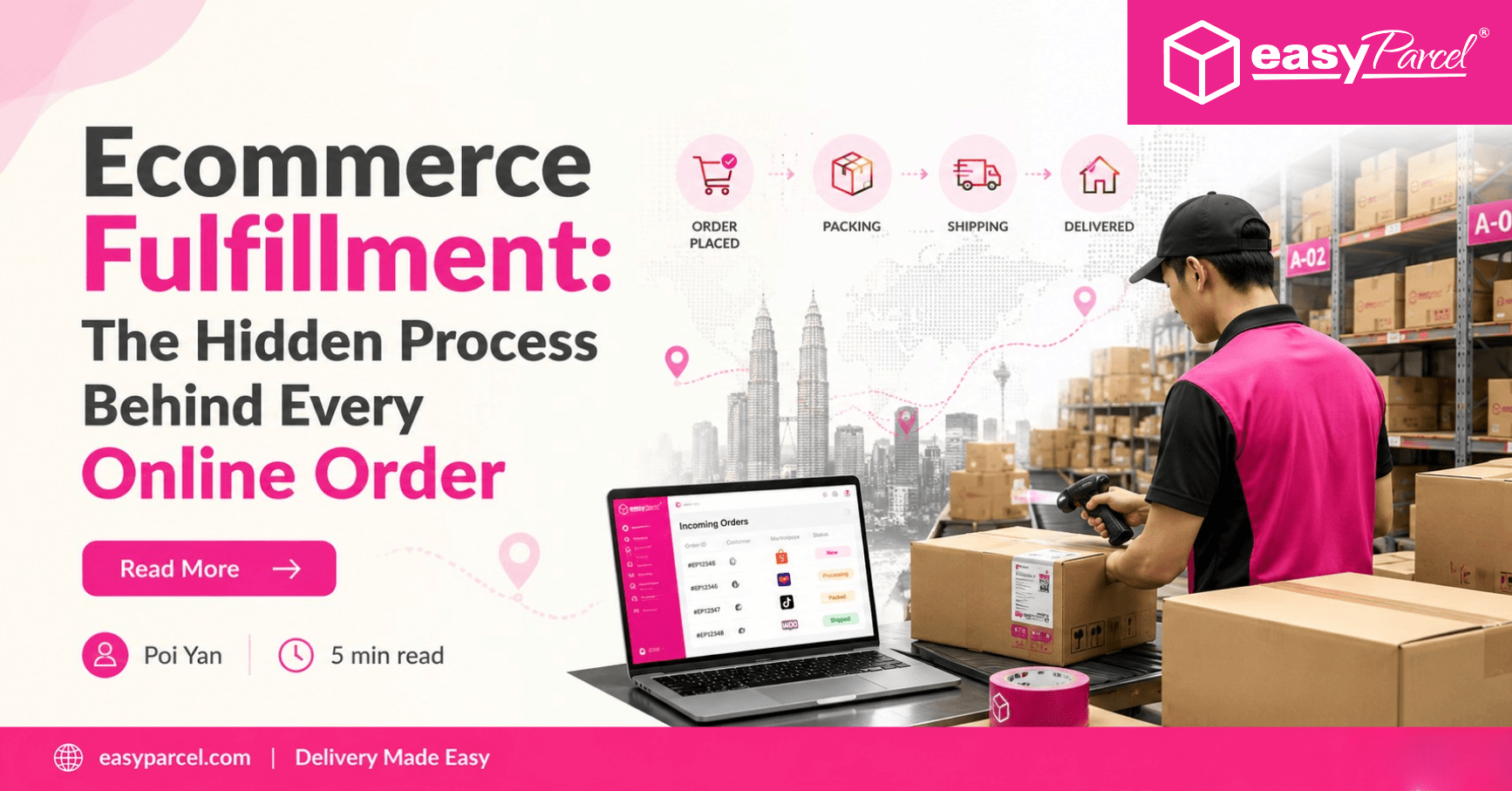
Ecommerce fulfillment is the heartbeat of every successful online store. Ever thought about what happens after you hit “Place Order”? That’s when the real action begins behind the scenes! Your order is quickly picked from the warehouse shelves, carefully packed, labeled, and handed over for delivery—ready to start its journey straight to your doorstep.
Here’s a simple and clear guide to help you understand ecommerce fulfillment. Let’s jump in!
Contents
What Is Ecommerce Fulfillment?
Ecommerce fulfillment is the supply chain process that happens after a customer places an order online. It covers the entire journey of a product, including receiving and storing inventory, processing orders, picking and packing items, shipping parcels, and handling returns.
In simple words, it’s everything that happens behind the scenes to make sure your online order reaches you quickly, safely, and smoothly.
4 Types of Ecommerce Fulfillment
1. In-House Fulfillment (Self-Fulfillment)
2. Third-Party Logistics (3PL) Fulfillment
Third-party logistics (3PL) fulfillment is when a business outsources storage and shipping to a professional fulfillment provider. The seller sends inventory to a fulfillment center, and the provider takes care of picking, packing, and shipping once an order is received.
3. Dropshipping
4. Hybrid Fulfillment
How Ecommerce Fulfillment Wroks?
1. Receiving and Inventory Storage

Source: Pinterest
Products are first delivered from manufacturers or suppliers to a warehouse or fulfillment center. But the real action starts as soon as they arrive! Each item is carefully checked to make sure the quantity is correct and the products are not damaged.
After inspection, items are registered into the inventory system and assigned to specific storage locations such as bins, shelves, or pallets. Each product is usually labeled with a SKU (Stock Keeping Unit) so it can be easily tracked later.
2. Order Processing

Source: Pinterest
When a customer places an order on an e-commerce platform, the system automatically captures the order details such as product type, quantity, and delivery address. At the same time, the inventory system updates stock levels to prevent overselling. Once payment is confirmed, the order is forwarded to the warehouse management system.
3. Picking and Packing

Source: Pinterest
In this stage, warehouse staff or automated systems follow a “picking list” to locate the exact items ordered. After all items are picked, they are brought to a packing station. Protective materials such as bubble wrap, air cushions, or paper fillers are used to prevent damage during transport. Finally, an air waybill attached to ensure proper routing and tracking.
4. Shipping and Returns

Source: Pinterest
Once packed, the parcel is handed over to a courier service. The parcel is scanned into the courier system, and a tracking number is generated so customers can monitor their shipment in real time. The courier then transports the parcel through sorting hubs and delivery routes until it reaches the customer’s doorstep.
But the journey doesn’t always end perfectly—sometimes issues like damaged goods, incorrect items, or customer returns can occur.
Common Challenges of Ecommerce Fulfillment
Inventory Management Issues
Sometimes the system shows items are available when they are actually out of stock, leading to overselling.
Shipping Delays
These can happen due to courier problems, bad weather, customs clearance, or high order volume during peak seasons.
Packing Errors
Mistakes can happen during the picking and packing stage, such as sending the wrong item, wrong size, or missing products in the order.
High Fulfillment Costs
Fulfillment involves many costs such as storage fees, packaging materials, labor, and shipping charges. For small businesses, these costs can become high, especially when handling international orders or low-margin products.
Returns Management
It adds extra cost and workload because the product has to move backward in the supply chain instead of forward.
Ecommerce fulfillment is the engine behind every successful online store—it’s what turns a simple click into a complete delivery experience.
Ready to improve your e-commerce fulfillment process? Start streamlining your online store today by integrating it with EasyParcel. Automate your orders, simplify shipping, reduce manual work, and deliver faster to your customers.
FAQs
1. What are the 4 types of ecommerce fulfillment?
The 4 types of e-commerce fulfillment are in-house fulfillment, third-party logistics fulfillment (3PL), dropshipping, and hybrid fulfillment, which are different ways businesses store, pack, and deliver online orders to customers.
2. What is the ecommerce fulfillment method?
The ecommerce fulfillment method refers to how an online business manages the process of storing inventory, processing orders, packing products, and shipping them to customers.