Singapore
 Thailand
 Indonesia
Logistics and supply chain management are what keep the world moving—quietly, but powerfully. 🚚✨
Have you ever thought about how the products you use every day actually reach you? Every item has a journey behind it. It starts as raw materials, gets transformed in factories, moves through warehouses, and finally arrives right at your doorstep.
Pretty amazing, right? All of this is carefully planned so deliveries are on time, in good condition, and at the right cost.
In this blog, we’ll explore logistics and supply chain management to help you better understand how they work.
Contents
What Is Logistics?
Source: Pinterest
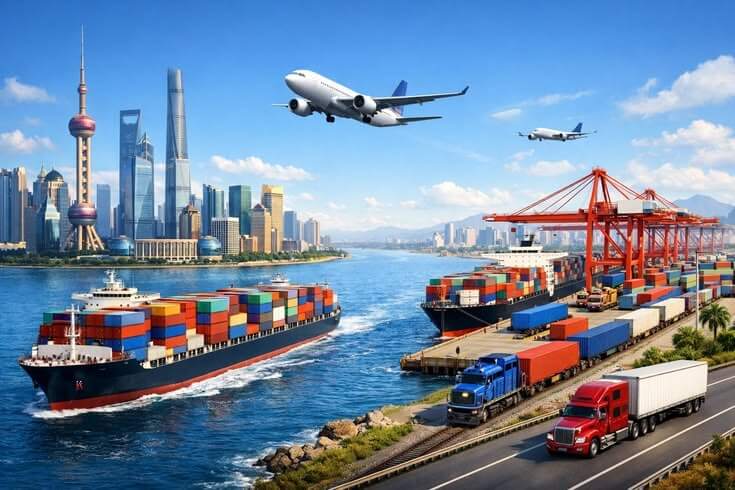
Logistics is the process of planning, organizing, and managing the movement of goods, information, and resources from the point of origin to the point of consumption. In business, it ensures that the right products are delivered to the right place, at the right time, and in the right condition.
There are four types of logistics:
- Inbound logistics – Bringing raw materials or products into a business from suppliers.
- Outbound logistics – Delivering finished products from a business to customers.
- Reverse logistics – Handling returns, refunds, repairs, or recycling of products from customers back to the seller.
- Third-party logistics (3PL) – Outsourcing logistics operations like storage and delivery to external providers, such as EasyParcel.
What Is Supply Chain?
Source: Pinterest
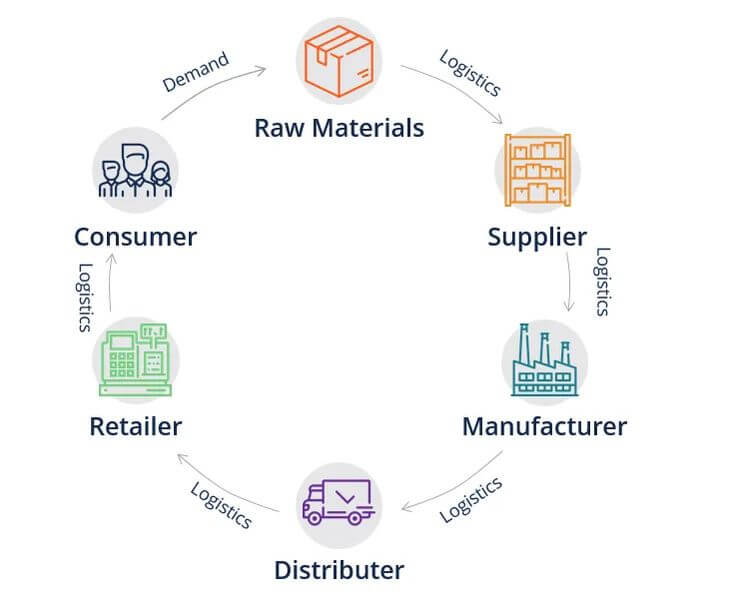
A supply chain refers to the complete system that is involved in producing and delivering a product to customers. It includes all the steps and parties involved, such as suppliers who provide raw materials, manufacturers who produce the goods, warehouses that store products, and logistics services that handle transportation and delivery.
There are six main types of supply chain models, each designed for different market needs and business conditions:
- Continuous Flow Model – Best for stable markets with predictable and steady demand, such as dairy or pharmaceuticals. It focuses on smooth, uninterrupted production and delivery.
- Fast Chain Model – Focuses on speed and quick response to changing trends, commonly used in industries like fast fashion where products must reach the market quickly.
- Efficient Chain Model – A cost-focused model designed to reduce waste and maximize efficiency. It is commonly used in highly competitive industries like heavy manufacturing.
- Agile Supply Chain Model – Built for unpredictable markets and customized products. It allows companies to quickly adjust production based on changing customer needs.
- Custom-Configured Model – Provides tailored production and personalized services to meet specific customer requirements.
- Flexible Model – Combines different strategies to handle seasonal demand changes or unexpected disruptions while maintaining efficiency.
Difference Between Logistics and Supply Chain
| Aspect | Logistics | Supply Chain |
| Main Focus | Transportation and delivery efficiency | End-to-end product flow from raw materials to customers |
| Purpose | Ensure goods are delivered efficiently and on time | Ensure smooth coordination of the entire production and delivery process |
| Activities | Warehousing, packaging, inventory management and shipping | Sourcing, manufacturing, warehousing, logistics and distribution |
| Relationship | Part of the supply chain | Includes logistics as one of its components |
Why Are Logistics Essential to Supply Chains?
Ensures Smooth Movement of Goods
Logistics makes sure products move efficiently from suppliers to manufacturers, warehouses, and customers.
Improves Delivery Speed
It helps businesses deliver products on time, meeting customer expectations.
Reduces Costs
Good logistics management helps lower transportation, storage, and operational costs.
Manages Inventory Effectively
It helps maintain the right stock levels and avoids overstocking or shortages.
Supports the Entire Supply Chain
Logistics connects all stages of the supply chain, making the system work smoothly from start to finish.
Common Challenges in Logistics and Supply Chain
Rising Transportation Costs
Fuel prices, shipping fees, and carrier charges can increase overall logistics expenses and affect business profit margins.
Delivery Delays
Traffic issues, port congestion, bad weather, and customs clearance problems can cause shipments to arrive late.
Inventory Management Issues
Poor planning can lead to overstocking (too much inventory) or stockouts (not enough stock), which affects sales and storage costs.
How to Find the Best Logistic Service Providers on EasyParcel?
Get Instant Quotes
Send More Parcels at Once
Save time, save cost with less click!
Integrations
Sync all your store orders and experience seamless booking experience in one click
Explore NowInstead of checking different courier companies one by one, you can now compare and book everything in a single place. With EasyParcel, finding the best logistics service provider becomes faster, easier, and more affordable.
Not sure which courier is cheapest? Just use the tool above👆to get instant quotes and see all your choices side by side.
Logistics and supply chain play a very important role in ensuring goods move smoothly from suppliers to customers. From storage, inventory management, transportation, to final delivery, every step must work together efficiently to reduce costs, avoid delays, and improve customer satisfaction.
Start using EasyParcel today to compare courier rates, book deliveries instantly, and manage all your shipments in one platform. Get started now and make your logistics process easier than ever!
FAQs
1. What is logistics and supply chain in simple words?
Logistics is the process of moving goods from one place to another, including storage, packing, and delivery. A supply chain is the full system that includes all steps from raw materials, production, storage, and transportation until the product reaches the customer.
2. What is the difference between logistics and supply chain?
Logistics is a part of the supply chain, while the supply chain covers the entire process from raw materials to the final customer.