Singapore
 Thailand
 Indonesia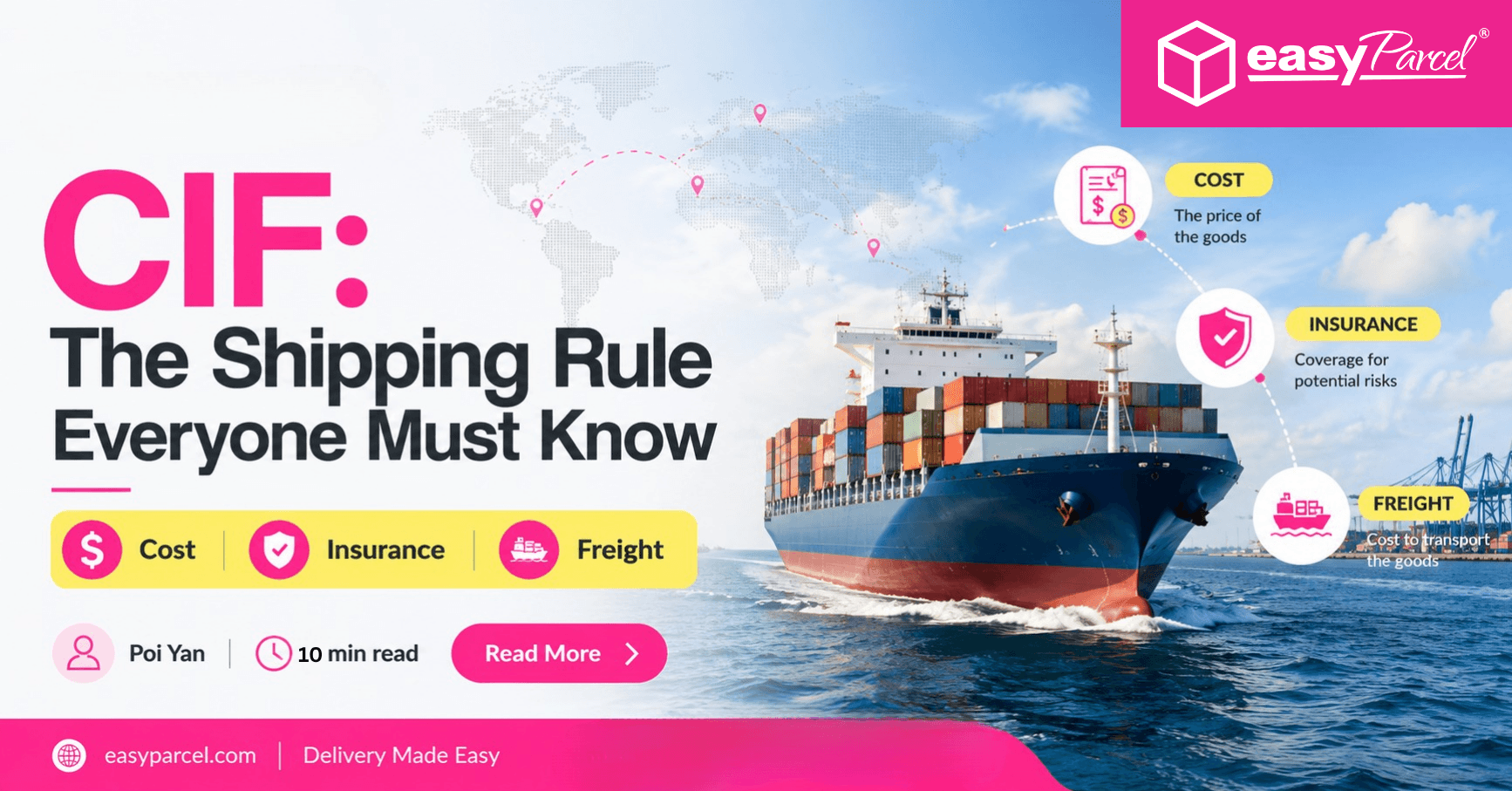
CIF (Cost, Insurance, and Freight) might sound technical at first—but it’s actually one of the most important shipping terms in international trade. Therefore, it is important to understand how CIF works during international shipping.
In this blog, we will explain everything about CIF to help ensure smooth international shipping. Let’s jump in and explore the world of global trade together!
Contents
What Is CIF?
CIF (Cost, Insurance, and Freight) is an international shipping term used in global trade to define the responsibilities of sellers and buyers when goods are transported by sea. Under CIF terms, the seller is responsible for paying the cost of the goods, arranging and covering the freight charges, and providing insurance for the shipment until it reaches the destination port.
CIF is commonly used in sea freight transactions because it provides convenience for buyers and ensures that the goods are insured during transit. However, it is important for both parties to clearly understand where risk transfers during the shipment to avoid confusion or disputes.
What Costs Are Included in CIF?
1. Cost
The cost refers to the price of the actual goods being sold under the CIF agreement. It includes the product manufacturing or purchase price and may also cover export packaging and preparation. This is the basic value of the items before any shipping or insurance charges are added.
2. Insurance
Insurance in CIF covers protection for the goods while they are being transported internationally. It is arranged and paid by the seller to protect against risks such as loss, damage, or accidents during shipping. This ensures that the goods have basic coverage until they reach the destination port.
3. Freight
Freight refers to the transportation cost of moving the goods from the seller’s port to the buyer’s destination port. It includes ocean shipping charges and related handling fees required to carry the cargo across countries. The seller is responsible for arranging and paying this cost until the shipment arrives at the destination port.
Key Benefits of Using CIF in Shipping
For Buyers
Hassle-Free Shipping Process
Buyers do not need to arrange freight or insurance, making international purchasing much simpler.
Easier Cost Planning
Buyers receive a single CIF price, making it easier to plan budgets without calculating separate shipping costs.
Faster Purchasing Decisions
Since shipping is handled by the seller, buyers can complete transactions more quickly without sourcing logistics providers.
Built-In Insurance Protection
Goods are insured during transit, offering protection against damage or loss before arrival at the destination port.
For Sellers
Higher Pricing Control
Sellers can include freight and insurance costs into the selling price, helping them maintain better profit margins.
Better Shipping Coordination Control
Sellers control the shipping and insurance process up to the destination port, ensuring smoother export handling.
Improved Customer Trust
Providing insurance and freight coverage builds confidence, especially in cross-border trade where buyers may feel uncertain.
Stronger Market Competitiveness
Offering CIF makes products more appealing in international markets, especially for first-time or small buyers.
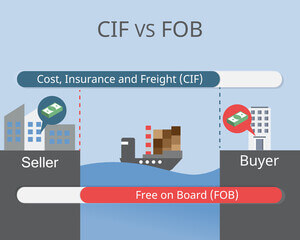
How Responsibilities are Divided?
Source: Adobe Stock
Seller Responsibilities
The seller takes care of most of the shipping process until the goods arrive at the destination port:
- Packing and preparing goods for export
- Handling export documents and customs clearance
- Transporting goods to the port of shipment
- Paying for ocean freight (international shipping)
- Arranging minimum insurance coverage for the goods
In short: The seller ensures the goods are shipped safely and reach the destination port.
Buyer Responsibilities
The buyer takes over once the goods arrive at the destination port:
- Import customs clearance
- Payment of import duties and taxes
- Inland transport from destination port to final location
- Handling delivery after arrival
In short: The buyer is responsible for everything after the goods reach the port.
How CIF Works?
1. Agreement on CIF Shipping Terms

Source: Pinterest
The shipping process begins when the buyer and seller agree to use CIF terms. They determine the product price, the destination port, and confirm that the seller will arrange and pay for both the ocean freight and the minimum insurance coverage required for the shipment.
2. Goods Are Prepared for Export

The seller prepares the goods for international shipping by packing and labeling them according to shipping standards. They also ensure all necessary export documents are ready and that the shipment complies with export regulations.
3. Export Customs Clearance and Port Delivery

Source: Pinterest
Before the goods can be shipped overseas, the seller completes export customs clearance and transports the shipment to the agreed port of departure. The seller also covers all local transportation and terminal handling costs before loading.
4. Goods Are Loaded onto the Vessel (Key Transfer Point)

Source: Pinterest
The seller loads the goods onto the vessel bound for the destination port. The seller is responsible for booking the ocean freight and purchasing the minimum cargo insurance required under CIF. These costs are included in the agreed selling price, giving the buyer a more convenient shipping arrangement.
 Key Point: Once the goods are successfully loaded onto the ship, the risk transfers from the seller to the buyer. Although the seller continues paying for freight and insurance, any loss or damage during the sea journey is now the buyer’s responsibility.
5. Shipment Arrives at the Destination Port

Source: Pinterest
The goods are transported to the named destination port under the arrangements made by the seller. Once the shipment arrives, the seller has fulfilled all obligations required under the CIF agreement.
6. Buyer Completes Import and Final Delivery

Source: Pinterest
After the goods arrive at the destination port, the buyer handles import customs clearance, pays any applicable duties and taxes, and arranges transportation to the final delivery location.
This marks the completion of the CIF shipping process.
CIF (Cost, Insurance & Freight) vs FOB (Free on Board): Key Differences
CIF and FOB are two widely used international trade terms under Incoterms that determine how shipping costs, risks, and responsibilities are divided between buyers and sellers.
| Feature | CIF (Cost, Insurance & Freight) | FOB (Free on Board) |
| Shipping cost | Paid by seller until goods reach destination port | Paid by buyer after goods are loaded onto the ship |
| Insurance | Provided by seller | Arranged by buyer |
| Freight charges | Paid by seller to destination port | Paid by buyer after loading |
| Shipping control | Seller controls shipping and carrier | Buyer controls shipping and carrier |
| Best for | Buyers who want easier process | Buyers who want more control |
Disadvantages of Using CIF in Shipping
For Buyers
Limited Control Over Shipping
Buyers cannot choose the freight forwarder or shipping route, as the seller manages the entire transport process up to the destination port.
Slower Decision Flexibility
Buyers must rely on the seller’s shipping arrangements, which can limit flexibility in urgent or time-sensitive shipments.
For Sellers
Potential Hidden Cost Pressure
Freight rates and insurance premiums can fluctuate, making it harder for sellers to predict exact costs and protect profit margins.
Pricing Complexity
Sellers must calculate and include shipping and insurance into product pricing, which makes pricing strategy more complicated.
Common Mistakes in CIF Shipping for Buyers and Sellers
Misunderstanding What CIF Actually Covers
Both parties often assume CIF includes door-to-door delivery. In reality, CIF only covers shipping and insurance up to the destination port, not final delivery.
Ignoring Insurance Coverage Details
Sellers may provide only basic insurance, while buyers assume full protection. This mismatch often causes disputes when damage or loss occurs during transit.
Choosing Unreliable Shipping Partners
Sellers must calculate and include shipping and insurance into product pricing, which makes pricing strategy more complicated.
Weak Understanding of Risk Transfer Point
Both parties sometimes misunderstand that risk transfers when goods are loaded onto the vessel, not when they arrive at the destination port.
International shipping under CIF can often feel complex and overwhelming, especially when it comes to handling freight charges, insurance arrangements, and destination responsibilities, which can easily confuse businesses managing cross-border trade.
But there is a simpler way to handle your shipping needs with EasyParcel, making the whole process more efficient and stress-free.
No More CIF Headaches—Just Click, Ship, and Relax with EasyParcel!

With EasyParcel, you can easily compare courier rates, book shipments in just a few clicks, and manage all your deliveries in one platform without the usual shipping complications.
Plus, with delivery coverage to 220+ countries worldwide, you can expand your business globally while EasyParcel takes care of the logistics—so you can focus on growing your business, not the shipping stress.
CIF takes away the complicated parts of importing by letting the seller handle most of the shipping process, making it a great choice for buyers who want a truly hassle-free experience.
Ready to simplify your international shipping? Ship with EasyParcel and enjoy a simple way to manage your deliveries, compare rates, and book shipments all in one platform. Sign up for FREE today and enjoy a RM10 discount coupon to kickstart your first delivery with EasyParcel!
FAQs
1. What does CIF mean?
CIF stands for Cost, Insurance, and Freight. It is an international shipping term where the seller pays for the cost of goods, shipping, and insurance until the goods reach the destination port.
2. What is FOB & CIF?
FOB (Free On Board) and CIF (Cost, Insurance, and Freight) are international shipping terms used in global trade to define the responsibilities of buyers and sellers. Under FOB, the seller is responsible for the goods until they are loaded onto the vessel, after which the buyer takes over all costs and risks. Under CIF, the seller pays for the goods, freight, and insurance until the shipment reaches the destination port, although the risk transfers to the buyer once the goods are loaded onto the ship.
3. Is CIF only for sea freight?
Yes. CIF is only used for sea and inland waterway transport.