Singapore
 Thailand
 Indonesia
Shopee prices can move fast. A product that looks like a good deal today may drop during a flash sale tomorrow, while a competitor’s best-selling listing may quietly adjust its price before a campaign goes live. Whether you are buying stock, shopping for your own use, or selling on Shopee, learning how to track price drops helps you make better decisions instead of relying on guesswork.
For buyers, a Shopee price tracker can help you avoid overpaying and spot the right time to checkout. For sellers, price tracking helps you understand market movement, plan promotions, protect your margins, and decide when shipping incentives can make your offer more attractive.
This guide walks you through a practical, step-by-step way to monitor Shopee prices before you buy or sell, using simple habits, a price history checker, a price tracking app, and a price comparison tool where useful.
Contents
Why Tracking Shopee Price Drops Matters

On marketplaces like Shopee, price is rarely static. Sellers may change prices based on campaigns, vouchers, stock levels, competitor movement, supplier costs, or shipping strategy. A product’s listed price also does not always tell the full story because the final checkout cost may include shipping fees, vouchers, coins, bundles, or platform discounts.
That is why tracking price drops matters for both sides of the marketplace.
If you are a buyer, price tracking helps you:
- Decide whether to buy now or wait
- Identify fake discounts or inflated pre-sale prices
- Compare similar products across sellers
- Plan purchases around payday sales, double-digit campaigns, and flash deals
- Avoid impulse buying just because a listing says “limited time offer”
If you are a seller, price tracking helps you:
- Understand your competitor’s regular price range
- Spot aggressive discounting before it affects your sales
- Plan Shopee campaign pricing without damaging profit margins
- Decide whether to compete on product price, shipping value, bundles, or service
- Monitor how your own price changes affect conversion
The key is not to chase the lowest price every time. The goal is to understand the real price pattern so you can act at the right moment.
Step 1: Know What Price You Actually Need to Track
Before using a Shopee price tracker or price comparison tool, decide which price matters most to you. The price shown on a product listing may not be the same as the final amount you pay or earn.
For buyers, track:
- Listed price – The original price shown on the product page.
- Discounted price – The price after seller or campaign discounts.
- Final checkout price – The amount you pay after vouchers, coins, and shipping.
- Price per unit – Important when comparing different pack sizes or bundles.
- Shipping fee – A cheaper product may cost more overall if shipping is higher.
For sellers, track:
- Competitor price – See how similar products are priced.
- Campaign price – Monitor competitor discounts during Shopee sales.
- Bundle and voucher offers – These can make a competitor’s final deal more attractive without lowering the listed price.
- Shipping offer – Free or discounted shipping can influence the buyer’s decision.
The key is to track the final value, not just the displayed product price. This gives you a clearer picture of whether a deal is genuinely attractive or whether a competitor is offering better overall value.
Step 2: Create a Shortlist of Products to Monitor
Trying to track every product on Shopee is overwhelming. Start with a shortlist.
If you are a buyer, shortlist products that fit one of these categories:
- Items you plan to buy within the next few days or weeks
- Higher-value products where a small percentage drop can save you more
- Repeat purchases such as skincare, supplements, pet supplies, pantry items, or office supplies
- Products with many sellers offering similar listings
- Seasonal items that may fluctuate before campaigns
If you are a seller, shortlist products based on business impact:
- Your best-selling SKUs
- Products with tight margins
- Items often included in Shopee campaigns
- Products with many direct competitors
- New products you are considering sourcing
- Slow-moving stock you may need to promote
For each item, save the Shopee product link, seller name, current price, shipping estimate, and any important notes. If you want a simple setup, use a spreadsheet or notes app. If you monitor many items, a dedicated shopee price tracker or price tracking app may be more efficient.
Step 3: Record the Baseline Price Before Any Sale Period

Source: Pinterest
A price drop only means something if you know the original price. That is why you need a baseline.
A baseline price is the normal selling price before vouchers, campaigns, or flash sales. It helps you judge whether a promotion is genuinely attractive or simply presented as a discount.
To record a useful baseline, capture these details:
- Product name
- Product link
- Seller name
- Listed price
- Available variation, such as size, colour, model, or quantity
- Shipping fee estimate
- Seller voucher, if available
- Platform voucher, if relevant
- Final checkout price, if you are a buyer
- Date and time checked
For buyers, this prevents the common problem of seeing a “sale” label without knowing whether the price is actually lower than usual.
For sellers, baseline tracking helps you understand whether competitors are running short-term promotions or permanently lowering prices. This matters because you should respond differently to each situation. A one-day flash sale may not require major changes. A long-term price reduction by several competitors may signal a shift in market pricing.
Step 4: Use a Price History Checker to Understand Patterns
A price history checker helps you see whether a Shopee listing has been cheaper before. Instead of only looking at today’s price, you can review past movement and identify patterns.
When using a price history checker, pay attention to:
- The lowest recorded price
- The highest recorded price
- The average price over time
- How often the price drops
- Whether drops happen during specific campaigns
- Whether the seller raises prices before applying discounts
- How long discounts usually last
For buyers, the most useful question is: “Is today’s price close to the historical low?” If the current price is only slightly above the lowest recorded price and you need the item soon, buying now may be reasonable. If the price usually drops every month and you are not in a rush, waiting could make sense.
For sellers, a price history checker can reveal competitor behaviour. Some sellers may discount heavily only during major campaigns. Others may frequently adjust prices to win search traffic. Understanding this pattern helps you decide whether to match prices, adjust bundles, improve product pages, or compete through shipping and service.
If you cannot access automated price history for a listing, you can still build your own manually. Check your selected items at the same time each day and record the price. After one or two weeks, you will already have a clearer picture.
Step 5: Set Alerts With a Price Tracking App
Manual tracking works, but it can become time-consuming. A price tracking app helps by monitoring selected products and notifying you when the price changes.
A good price tracking setup should allow you to:
- Save product links
- Set your target price
- Receive alerts when the price drops
- View price movement over time
- Compare current prices against past prices
- Track multiple products in one place
For buyers, use alerts to avoid checking Shopee repeatedly. Decide your ideal price, set the alert, and wait. This is especially useful for electronics, home appliances, beauty products, household essentials, and other items where prices can vary during campaigns.
For sellers, use alerts to monitor competitor movement. If a direct competitor drops below a certain price, you can review your own offer before losing visibility or conversion. However, avoid reacting automatically to every price change. Price tracking should inform your strategy, not push you into a race to the bottom.
When setting alerts, choose a realistic target price. If your target is too low, you may never receive a useful notification. A practical method is to use historical data, your budget, or your minimum acceptable margin.
For example:
- A buyer might set an alert when a product falls 10 percent below its usual price.
- A seller might set an alert when a competitor’s price drops below their cost-plus-margin threshold.
- A reseller might set an alert when sourcing stock becomes profitable after shipping and marketplace fees.
Step 6: Compare Prices Across Similar Shopee Listings
Sometimes the best deal is not a price drop on one listing. It may be a similar product from another seller.
Use a price comparison tool or manual comparison process to check alternatives. Search for the same product name, model number, brand, pack size, or key specification. Then compare listings based on the full buying picture.
Look at:
- Product price
- Variation price differences
- Seller rating
- Number of reviews
- Review quality
- Product photos and descriptions
- Shipping fee
- Estimated delivery time
- Return policy
- Vouchers
- Bundles
- Warranty or authenticity details, where applicable
For buyers, this prevents you from focusing on one listing just because it has a visible discount. A competitor listing may still be cheaper after shipping and vouchers.
For sellers, price comparison helps you understand your real competitive set. Do not only compare against the cheapest listing. Compare against sellers with similar product quality, service level, review count, fulfilment speed, and customer trust. If your product has stronger reviews, clearer photos, better packaging, or faster shipping options, you may not need to be the cheapest.
Step 7: Track the Final Checkout Price, Not Just the Listing Price
Source: Pinterest
A Shopee price tracker can show listed price movement, but buyers and sellers should also care about the final checkout price.
For buyers, the final checkout price is what you actually pay. It may change depending on:
- Seller vouchers
- Platform vouchers
- Free shipping vouchers
- Coins redemption
- Bundle discounts
- Payment promotions
- Shipping address
- Delivery option
Before you buy, add the item to cart and review the checkout total. If you are comparing multiple sellers, calculate the final cost for each listing.
For sellers, final checkout price affects conversion. A buyer may choose a slightly higher-priced product if the total cost feels better after shipping and vouchers. That means your Shopee pricing strategy should include delivery cost planning.
This is where sellers should think beyond product price alone. If your shipping setup is expensive or unclear, buyers may abandon their cart even if your item price is competitive. Active Shopee sellers should review how parcel size, courier options, packaging choices, and shipping fees affect the buyer’s total cost.
If you ship orders regularly, using a shipping platform such as EasyParcel can help you compare courier options and manage deliveries more efficiently. Better shipping decisions can support your pricing strategy, especially when you are trying to protect margins while staying competitive.
Step 8: Watch for Campaign Timing and Repeated Price Cycles
Shopee price drops often follow campaign cycles. While every seller behaves differently, many buyers and sellers notice more price movement around sale periods, payday campaigns, flash sales, and seasonal shopping moments.
Instead of checking randomly, build a tracking rhythm around likely decision points.
For buyers, consider checking:
- A few days before a major campaign
- On the first day of a campaign
- During flash sale windows
- Near payday periods
- When platform vouchers become available
- Before your cart vouchers expire
For sellers, review competitor prices:
- Before joining a campaign
- While setting promotional stock limits
- Before approving voucher amounts
- During the campaign, especially for best-selling products
- After the campaign ends to see whether competitors return to normal pricing
The goal is to identify patterns. If a product often drops during monthly campaigns, you can plan future purchases better. If a competitor always discounts aggressively for one day and then returns to normal, you may not need to change your long-term pricing.
Step 9: Separate Real Discounts From Marketing Noise
Not every discount is worth acting on. A product may show a large percentage discount, but the actual selling price may still be close to normal. This is why your baseline and price history matter.
To judge whether a price drop is real, ask:
- Is the current price lower than the price I recorded earlier?
- Is it lower than the recent average price?
- Is it close to the historical lowest price?
- Does the discount still look good after shipping?
- Are vouchers included in the final price?
- Is the product variation the same as before?
- Has the seller changed bundle quantity or pack size?
Be especially careful when comparing listings with different quantities. A product may look cheaper, but it may contain fewer units, a smaller volume, or a different model.
For sellers, also monitor whether competitors are changing the value proposition instead of the product price. For example, a competitor may keep the price stable but add a bundle, voucher, free gift, or lower shipping fee. If you only track the listing price, you may miss the real competitive move.
Step 10: Factor Shipping Into Your Shopee Pricing Strategy
For buyers, shipping is part of the total price. For sellers, shipping is part of the customer experience and margin calculation.
A buyer may compare two listings and choose the one with the better final checkout value, even if the product price is not the lowest. A seller who ignores shipping may lose orders at the cart stage.
If you are a Shopee seller, review these shipping-related details:
- Product weight and dimensions
- Packaging size
- Courier availability
- Delivery speed
- Shipping fee shown to buyers
- Whether your packaging adds unnecessary cost
- Whether bundles change parcel weight significantly
- How shipping costs affect your promotional margin
For example, if you discount a product by a small amount but the parcel cost remains high, the offer may not feel attractive to buyers. On the other hand, if you manage shipping efficiently, you may be able to offer better overall value without cutting too deeply into product price.
This is where EasyParcel can be useful for active sellers who want to compare courier options, manage shipments, and keep delivery planning organised. Instead of treating shipping as an afterthought, include it in your price tracking and campaign planning process.
Bonus: Integrate Your Shopee Account With EasyParcel for Smoother Shipping
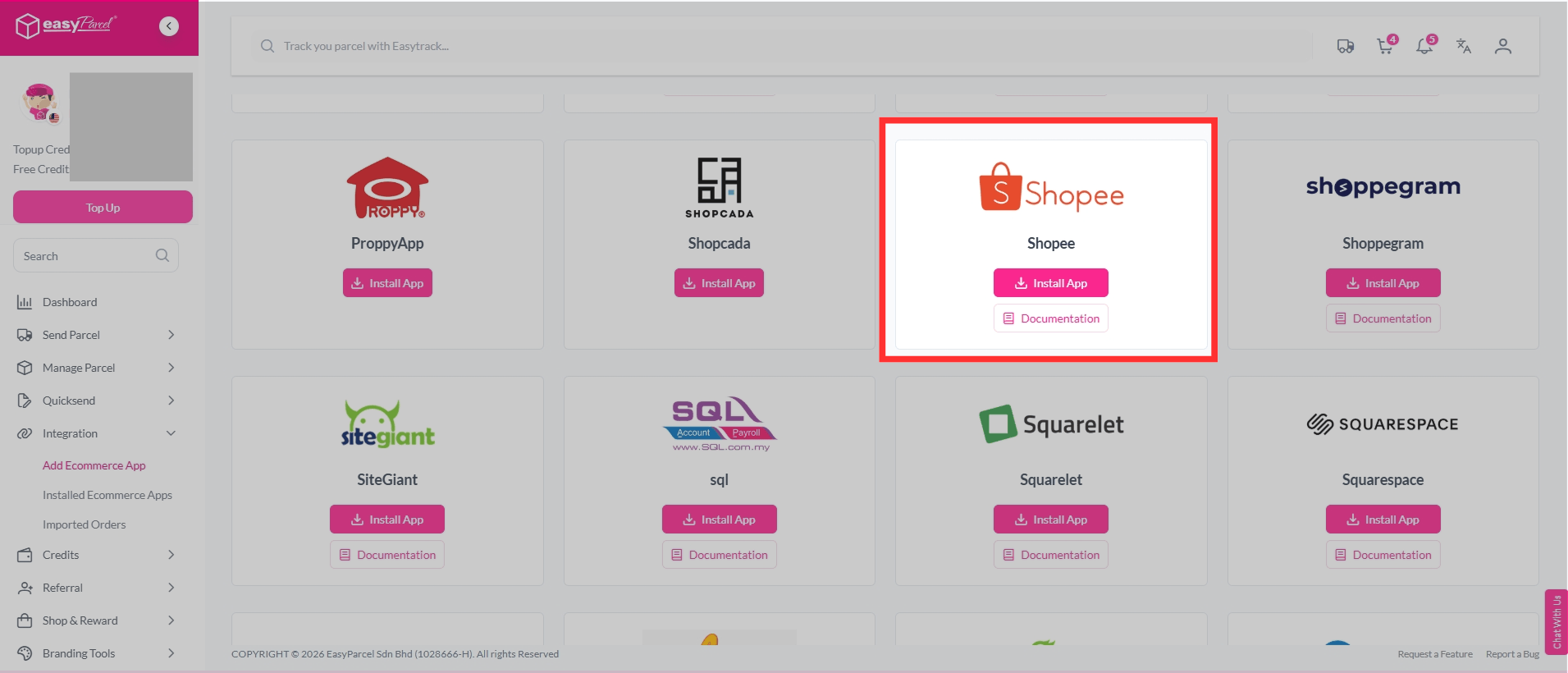
If you’re selling on Shopee, tracking prices is only half the game. The other half is getting orders out fast—without losing your mind. By connecting your Shopee store to EasyParcel, you can automatically sync your orders, compare shipping rates, print shipping labels, and track deliveries—all from one dashboard. This helps simplify your fulfilment workflow, save time, and keep your Shopee orders moving smoothly.
You can click here to learn more about Shopee integration with EasyParcel.
How Buyers Can Use Price Tracking to Shop Smarter

Source: Pinterest
If you are a buyer, your goal is simple: get the right product at the right final price.
Use your shopee price tracker to watch your preferred listings, but stay flexible. If another seller offers the same product with better vouchers, stronger reviews, or lower shipping, compare the total value. A price comparison tool can help you avoid tunnel vision.
Before you checkout, ask yourself:
- Is this price lower than the baseline I recorded?
- Is it close to the lowest price I have seen?
- Is the final checkout total still attractive after shipping?
- Do I need this now, or can I wait for a better campaign?
- Is the seller reliable enough for this purchase?
If the answer is yes, you can buy with more confidence. If not, keep tracking.
How Sellers Can Use Price Tracking to Sell Smarter

Source: Pinterest
If you are a seller, your goal is not always to be cheapest. Your goal is to offer strong value while protecting profit.
Use price tracking to understand the market, then decide how to position your listing. Sometimes a direct price drop is useful. Other times, you may get better results from bundles, better product content, vouchers, faster fulfilment, or more attractive shipping options.
Before changing your price, ask:
- Is the competitor’s price drop temporary or long-term?
- Can I match it without hurting my margin?
- Would a voucher work better than lowering the listed price?
- Can I create a bundle that improves perceived value?
- Is my shipping cost making my final checkout price less competitive?
- Can I improve delivery options or fulfilment efficiency?
For active Shopee sellers, this is also a good moment to review your delivery process. If you are shipping regularly, EasyParcel can support your workflow by helping you manage courier comparisons and parcel delivery more efficiently. When your shipping process is smoother, it becomes easier to plan promotions with confidence.
Final Thoughts
Tracking Shopee price drops is not just about finding the lowest number. It is about understanding the full deal.
For buyers, that means checking the price history, comparing alternatives, watching the final checkout total, and buying only when the value makes sense. For sellers, it means monitoring competitors, planning discounts carefully, protecting margins, and remembering that shipping can influence the buyer’s final decision.
Start small. Pick a few products, record their prices, use a price tracking app where helpful, and compare the total cost before you act. Over time, you will recognise patterns faster and make better buying or selling decisions.
And if you are an active Shopee seller looking to keep your delivery process organised while planning competitive offers, consider reviewing your courier and shipping workflow with EasyParcel. Smarter shipping can support smarter pricing, especially when every checkout decision counts.
Ready to make your Shopee shipping easier? Sign up for FREE with EasyParcel and get a RM10 discount voucher to enjoy savings on your first delivery.
FAQs
1. What is a Shopee price tracker?
A Shopee price tracker is a tool or app that helps you monitor product prices over time. It can help you identify price drops, compare historical prices, and decide when to buy or adjust your selling price.
2. How can I track Shopee price drops?
You can track Shopee price drops by recording the product’s current price, checking its price history, using a price tracking app, and setting alerts for your target price. You should also compare the final checkout price, including shipping and vouchers.
3. Should I track the Shopee product price or checkout price?
Ideally, track both. The listed product price shows how the seller positions the item, while the final checkout price shows what the buyer actually pays after vouchers, shipping fees, coins, and other applicable discounts.
4. How to check the lowest price in Shopee?
To check the lowest price in Shopee, search for the product and compare the current price with its price history where available. You can also use a Shopee price tracker or price tracking app to monitor price changes and set alerts when the product reaches your target price.