Singapore
 Thailand
 Indonesia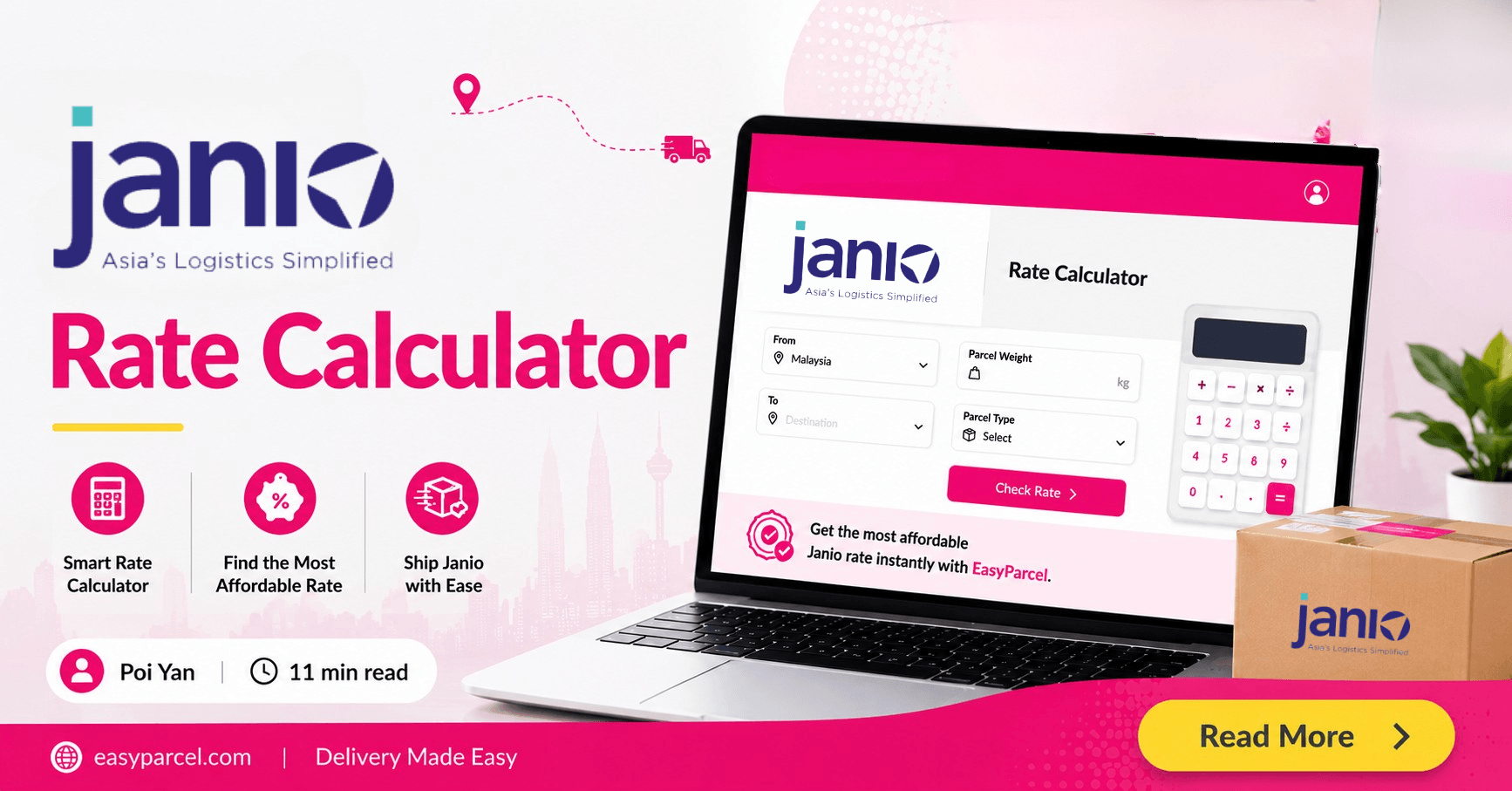
Shipping costs can make or break an online order, especially when customers expect clarity before they check out. A Janio Rate Calculator helps merchants estimate delivery costs before booking shipments, planning promotions, or setting checkout fees. Used well, it turns Janio shipping rates from a last-minute surprise into a practical part of your pricing and fulfillment strategy.
Contents
What Does a Janio Rate Calculator Do?
A Janio Rate Calculator estimates the cost of sending a parcel through Janio based on the shipment details you provide. In a typical workflow, you enter information such as origin, destination, parcel weight, package dimensions, and delivery requirements, then review the available rate estimate before moving forward.
For ecommerce sellers, this matters because shipping is not just an operational cost. It influences product margins, customer expectations, cart conversion, and repeat purchases. When you can estimate shipping earlier, you can make better decisions about where to sell, how to price products, and what delivery options to show buyers.
A rate calculator is especially useful when orders vary by parcel size or destination. Instead of relying on a single flat estimate for every shipment, you can compare realistic scenarios and reduce the risk of undercharging or overcharging for delivery.
Why Shipping Rate Visibility Matters
Shipping is often one of the final costs a customer sees before placing an order. If the fee feels unexpected, unclear, or too high, the customer may hesitate even if they like the product. Clear rate planning helps you set expectations earlier in the buying journey.
For merchants, visibility also supports healthier margins. A small miscalculation on one parcel may not seem serious, but repeated underestimates can quietly reduce profit across many orders. On the other hand, consistently overestimating shipping may make your offers less competitive.
Using a Janio rate calculator gives teams a more structured way to review costs before they commit to shipping promises. It also helps customer service, warehouse, and finance teams work from the same assumptions instead of guessing from memory or past invoices.
The Information You Should Prepare Before Checking Rates

A shipping estimate is only as useful as the details behind it. Before using a Janio Rate Calculator, gather the core information that affects pricing and service availability. This keeps the estimate closer to what you may see during booking.
Prepare the following details:
- Origin and destination: Include the pickup location and the delivery country, city, or postal code where required.
- Parcel weight: Use the packed weight, not only the product weight, because packaging adds to the final shipment.
- Package dimensions: Measure the outer length, width, and height after packing.
- Shipment quantity: Check whether you are estimating one parcel, several parcels, or a recurring shipping pattern.
- Delivery needs: Note whether the order requires faster delivery, standard service, tracking, or any special handling.
- Product type: Some goods may need extra review, documentation, or restrictions depending on destination and carrier rules.
This preparation may feel basic, but it prevents one of the most common pricing problems: calculating from incomplete information. If a product is weighed without its box, filler, label, or protective material, the estimate may look lower than the actual shipment cost.
How Do Janio Shipping Rates Usually Vary?

Source: Pinterest
Janio shipping rates usually vary because parcel and route details vary. Weight, dimensions, origin, destination, delivery speed, and shipment requirements can all influence the estimate, so two parcels that look similar on the shelf may have different delivery costs once packed and routed.
Distance is one obvious factor, but it is not the only one. A lightweight item in a large box can sometimes be priced differently from a compact item of similar physical weight because shipping providers may consider package volume. This is why dimensional information is important, even for products that are not heavy.
Destination details also matter. Delivering to a major urban area may differ from delivering to a remote or less frequently served location. Service options may also change depending on the route, so rate checking should happen before you promise a specific delivery experience to customers.
Finally, business rules affect how you use the estimate. Some merchants pass the exact shipping cost to customers. Others subsidize part of it, offer free shipping above a threshold, or build delivery costs into product pricing. A calculator does not decide the strategy for you, but it gives you the information needed to choose one confidently.
Turning Rate Estimates Into Better Checkout Experiences
Customers do not need to know every operational detail behind a shipping fee, but they do need the fee to feel fair and understandable. When rate estimates are built into your planning process, you can design a checkout experience that feels more transparent.
For example, you may decide to display standard delivery as the default option and reserve faster delivery for customers who are willing to pay more. You may also set free-shipping thresholds based on realistic average costs rather than copying a competitor’s offer. That approach protects margin while still giving customers a simple incentive to add more to their cart.
A good checkout shipping strategy should do three things:
- Set expectations early: Avoid surprising customers with a delivery fee only at the final step.
- Match the promise to the service: Do not offer delivery speeds that your fulfillment process cannot consistently support.
- Protect product margins: Review how shipping fees interact with discounts, bundles, and promotions.
The goal is not always to show the lowest possible shipping cost. The goal is to show a clear, realistic, and commercially sensible cost that supports both the customer experience and the business.
Practical Ways to Use a Janio Rate Calculator in Your Business
A Janio rate calculator can support more than single-shipment checks. It can become part of day-to-day decision-making across product launches, market expansion, and campaign planning. The more consistently you use it, the easier it becomes to spot patterns in your shipping costs.
Planning Product Pricing
Before launching a product, estimate shipping for the most common destinations you expect to serve. If the item is bulky, fragile, or unusually shaped, test several packaging options. A slightly smaller or more efficient box may help you create a better delivery cost structure.
This is also useful when choosing between product bundles. A bundle may increase average order value, but it may also change package weight or dimensions. Checking the estimate first helps you understand whether the bundle still makes financial sense.
Comparing Destination Markets
If you are expanding into new regions, shipping costs should be part of your market research. Product demand matters, but fulfillment feasibility matters too. Estimating delivery costs across several destinations can help you decide where to focus advertising, inventory, and customer support.
You do not need perfect data to start. Even a small set of representative shipment examples can reveal whether a market is likely to need different pricing, a higher free-shipping threshold, or a separate delivery policy.
Supporting Seasonal Promotions
During peak sales periods, merchants often run discounts, bundles, and free-shipping offers at the same time. That combination can be powerful, but it can also compress margin quickly. Checking rate estimates before the campaign goes live helps you design offers that are appealing without becoming too expensive to fulfill.
For instance, you may use shipping estimates to decide whether a promotion should apply to all orders, selected regions, or only orders above a certain value. That small planning step can prevent a successful sales campaign from becoming an unprofitable one.
Common Mistakes to Avoid When Estimating Rates

Source: Pinterest
Rate calculators are helpful, but they are not magic. The quality of the estimate depends on the quality of the inputs and how carefully you interpret the result. Avoid these common mistakes when reviewing Janio shipping rates:
- Using product weight instead of packed weight: The box, filler, tape, and inserts can change the final number.
- Ignoring dimensions: Large lightweight parcels may still affect pricing because they take up space.
- Assuming one route represents every route: A rate for one destination should not automatically be used for all customers.
- Forgetting returns: If your category has frequent returns, include reverse logistics in your broader cost planning.
- Overpromising delivery speed: A rate estimate is only one part of the delivery promise; processing time and cutoff times matter too.
- Not reviewing rates regularly: Shipping conditions, service options, and business needs can change, so old estimates should not guide every new decision.
The best habit is to treat estimates as planning tools, not permanent rules. Recheck important routes and high-volume products whenever you change packaging, launch a promotion, or enter a new market.
Building a Simple Shipping Cost Workflow
A practical workflow keeps shipping decisions consistent, even as order volume grows. You do not need a complicated system to start; you need a repeatable process that your team can follow.
Consider this simple approach:
- Define your standard package types. List the boxes or mailers you use most often and record their packed dimensions.
- Group products by shipping profile. Separate compact, bulky, fragile, and heavier items so you can estimate more accurately.
- Check sample destinations. Choose the markets or regions that represent your most common customer locations.
- Review estimated costs. Use the Janio Rate Calculator to compare likely shipping scenarios.
- Set customer-facing rules. Decide whether to offer flat rates, live estimates, subsidized shipping, or free shipping thresholds.
- Review after real orders. Compare estimates with actual costs and adjust your rules where needed.
This workflow helps prevent shipping from becoming a reactive task. Instead of solving cost issues order by order, you build a clear framework that supports pricing, marketing, and fulfillment decisions.
When Should You Recheck Your Rates?
You should recheck your rates whenever the shipment details, sales strategy, or delivery promise changes. Even if your business uses the same products regularly, a new box size, new destination, new promotion, or new delivery expectation can make an old estimate less useful.
It is also wise to review rates before major campaigns. If you plan to promote free shipping, discount bundles, or international delivery, rate estimates should be part of the approval process. This protects the campaign from hidden fulfillment costs.
Rechecking is not about creating extra work. It is about keeping your decisions current enough to be useful. A few minutes spent confirming a rate can save time later by reducing customer confusion, internal corrections, or margin surprises.
Once you understand the factors that affect Janio shipping rates, it helps to have a convenient way to check and compare delivery costs before booking. This is where EasyParcel can make rate checking simpler.
Check Shipping Rates Instantly With EasyParcel
📦 Check Shipping Rates Instantly
Compare courier prices, delivery services, and shipping options from multiple courier partners all in one place.
If you want to compare delivery costs beyond a single courier, the EasyParcel Delivery Rate Checker makes it easier to review available shipping options in one place. With access to 60+ courier services, you can compare rates based on parcel details, destination, and delivery requirements before choosing a suitable service.
This is especially useful when checking Janio shipping rates because you can see how the estimated cost compares with other available courier options. Instead of focusing on one rate, you can consider different prices and services to find an option that better matches the parcel, budget, and delivery expectations.
Tip: Use the EasyParcel Delivery Rate Checker before confirming important orders, launching promotions, or setting shipping fees so that delivery costs are based on current parcel details rather than rough estimates.
Making Shipping a Strategic Advantage
Shipping is sometimes treated as a back-office task, but customers experience it as part of the product. A clear delivery fee, a realistic timeline, and a smooth handoff all shape how buyers feel about your brand. When you use rate estimates thoughtfully, you improve more than operations; you improve trust.
The Janio Rate Calculator can help merchants plan with more confidence by making delivery costs easier to estimate before important decisions are made. Whether you are pricing a product, preparing a campaign, testing a new market, or refining checkout rules, better visibility into Janio shipping rates gives you a stronger foundation.
The takeaway is simple: do not wait until an order is ready to ship before thinking about shipping cost. Build rate checks into your planning process, keep your inputs accurate, and use each estimate to create a clearer, more reliable experience for your customers.
With EasyParcel, you can also check and compare delivery rates from 60+ courier services in one place, making it easier to find a shipping option that fits your parcel and budget. Sign up for FREE and enjoy RM10 discount coupon on first delivery.
FAQs
1. What is a Janio Rate Calculator?
A Janio Rate Calculator is a tool that helps estimate shipping costs based on details such as origin, destination, parcel weight, dimensions, and delivery requirements.
2. What information do I need to calculate Janio shipping rates?
You typically need the parcel’s origin, destination, packed weight, package dimensions, shipment quantity, and preferred delivery service. Having accurate details helps produce a more useful estimate.
3. What factors affect Janio shipping rates?
Janio shipping rates can vary based on factors such as parcel weight, dimensions, destination, origin, delivery speed, and shipment requirements. Package volume may also affect the cost for larger but lightweight parcels.
4. Why are parcel dimensions important when calculating shipping costs?
Dimensions help determine how much space a parcel occupies during transportation. A lightweight parcel with large dimensions may have a different shipping cost from a compact parcel with the same physical weight.