Singapore
 Thailand
 Indonesia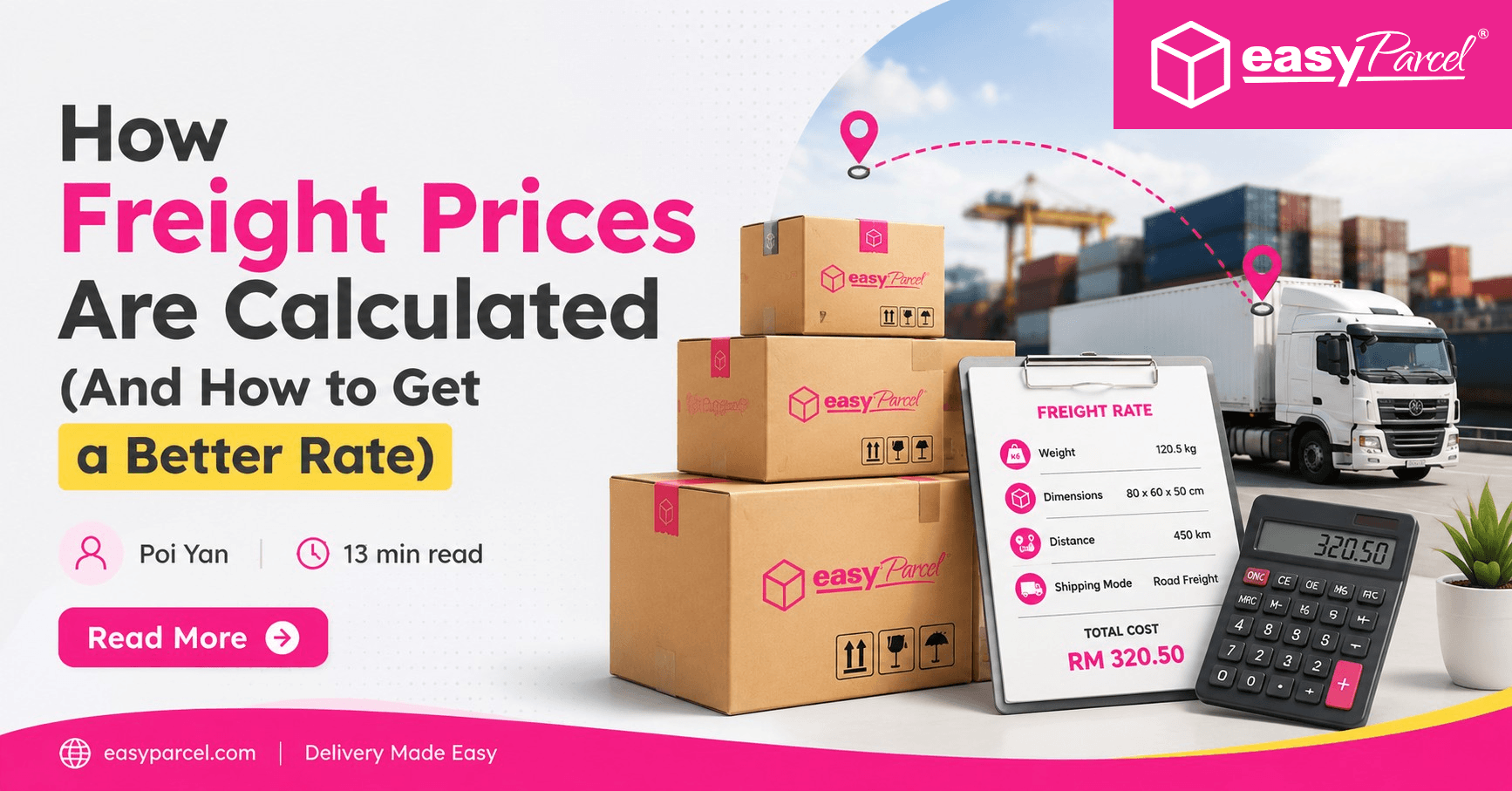
Freight pricing can feel complicated because it is shaped by several moving parts, not one simple fee. Your final rate may reflect distance, weight, dimensions, service type, fuel, accessorials, market demand, and how clearly your shipment details are provided.
The good news is that when you understand how freight prices are calculated, you can compare freight quotes more confidently and take practical steps to reduce shipping costs without creating delays or service problems.
Contents
What Actually Determines Freight Prices?
Source: Pinterest
Freight prices are determined by the characteristics of the shipment, the transportation service required, and the conditions in the market at the time of booking. Carriers and brokers look at how much space the freight uses, how heavy it is, where it is going, how quickly it needs to arrive, and whether any special handling is required. The more accurate and complete your shipment information is, the easier it becomes to receive reliable shipping rates and avoid surprise charges later.
In simple terms, freight pricing is a risk-and-resource calculation. A shipment that is easy to load, properly packaged, accurately measured, and moving on a common route is usually easier to price. A shipment that is oversized, urgent, fragile, hard to access, or missing key details requires more planning and may cost more.
That is why two shipments with the same weight can have very different freight prices. One may be stackable, palletized, and moving between major commercial zones. The other may be bulky, non-stackable, going to a rural location, and requiring a liftgate. From the outside, they may look similar. To a carrier, they use different amounts of space, time, equipment, and labor.
The Core Factors Behind Most Freight Quotes
Most freight quotes are built from a combination of shipment data and service requirements. While pricing methods vary by carrier, mode, and lane, the same core factors appear again and again.
1. Weight and dimensions
Weight matters because it affects fuel usage, equipment capacity, and handling. Dimensions matter because carriers are not only selling weight capacity; they are also selling space inside a trailer, container, aircraft, or cargo area. A light but oversized shipment can cost more than a heavier compact shipment because it takes up valuable room.
This is why accurate measurements are essential. Measure the longest points of the packaged freight, including pallets, crates, overhang, protective wrapping, and any irregular shapes. If the carrier measures the shipment and finds it larger than stated, your shipping costs may be adjusted after pickup.
2. Freight density and classification
For less-than-truckload shipments, density often plays a major role. Density compares the shipment’s weight to the amount of space it occupies. Dense freight is usually more efficient to move because it uses less space relative to its weight. Low-density freight may take up more trailer room and limit what else can be loaded.
Some pricing systems also use freight class, which considers density along with handling, liability, and stowability. Freight that is fragile, difficult to stack, unusually shaped, or more likely to be damaged may fall into a more expensive category. Even when class is not the central pricing method, the same practical concerns still affect freight prices.
3. Distance and shipping lane
Longer distances typically cost more, but mileage is not the only consideration. A busy shipping lane between major hubs may have better carrier availability and more competitive shipping rates. A less common route, remote delivery area, or difficult backhaul market may cost more because carriers have fewer opportunities to fill equipment efficiently.
The origin and destination also influence pricing through local conditions. Congested urban areas, limited appointment windows, port zones, and rural addresses can all affect the time and cost required to complete the move.
4. Mode and service level
The transportation mode you choose has a major impact on cost. Common options include parcel, less-than-truckload, full truckload, intermodal, air freight, ocean freight, and specialized services. Each mode serves a different balance of speed, capacity, handling, and cost.
Service level matters too. Standard transit is usually more economical than expedited shipping. Guaranteed delivery, team drivers, dedicated equipment, temperature control, white-glove service, and special handling can all increase the final rate because they require additional capacity, coordination, or carrier commitment.
5. Fuel, demand, and market timing
Fuel costs often appear as a separate surcharge or are built into the rate. Market demand also matters. When capacity is tight, carriers can be more selective, and freight prices often rise. When trucks, containers, or other transport capacity are more available, shippers may see more competitive freight quotes.
Seasonality can influence shipping rates as well. Retail peaks, produce seasons, severe weather, holidays, port congestion, and regional demand surges can all affect available capacity. If your shipment is time-sensitive during a busy period, booking earlier and providing complete details becomes even more important.
Why Do Freight Quotes Sometimes Change?
Freight quotes change because they are based on the information available at the time of quoting, and that information may be incomplete, inaccurate, or affected by market conditions. A quote is only as reliable as the shipment details behind it. If weight, dimensions, access needs, delivery location, or timing changes, the final invoice may change too.
The most common reason for a rate adjustment is a difference between quoted details and actual shipment details. For example, a pallet may be taller than expected, a delivery may require a liftgate, or the consignee may not be ready during the scheduled window. These changes add time, labor, space, or equipment requirements.
Freight quotes can also change when capacity shifts. A rate offered today may not be available later if the carrier’s available equipment fills up or demand increases on that lane. This is especially true for truckload and time-sensitive shipments, where live market conditions play a larger role.
To reduce changes, document the shipment carefully before requesting rates. Confirm the commodity, packaging type, pallet count, actual weight, full dimensions, pickup and delivery addresses, business hours, loading equipment, and any special instructions. The clearer the quote request, the fewer assumptions the provider has to make.
Common Charges That Affect Shipping Costs
The base rate is only one part of the total cost. Many shipments include additional charges because the move requires services beyond standard dock-to-dock transportation. These are often called accessorial charges.
Watch for charges related to:
- Liftgate service: Needed when the pickup or delivery site does not have a dock or forklift.
- Residential delivery: Applies when freight is delivered to a home or residential-style location.
- Inside pickup or delivery: Required when the driver must move freight beyond the curb or dock area.
- Limited access locations: Can include schools, construction sites, farms, storage facilities, military bases, or event venues.
- Appointment delivery: Needed when delivery must occur at a specific scheduled time.
- Reweigh or remeasure: Applied when actual shipment details differ from the quoted information.
- Detention or waiting time: Charged when the driver is delayed beyond the included loading or unloading time.
- Redelivery: Added when the carrier attempts delivery but cannot complete it.
- Special handling: Used for fragile, hazardous, temperature-sensitive, oversized, or high-value freight.
These charges are not always avoidable, but they are much easier to manage when they are known upfront. If you know a shipment needs a liftgate or appointment, include that information before requesting freight quotes. Hiding or overlooking it usually does not save money; it can instead create billing adjustments and delivery friction.
Practical Ways to Get Better Shipping Rates

Source: Pinterest
Better freight pricing is not only about negotiating. It is also about making your freight easier, clearer, and more efficient to move. Carriers value shipments that are accurate, predictable, and operationally smooth.
Start with these practical steps:
- Provide complete shipment details the first time. Include weight, dimensions, pallet count, commodity, packaging, addresses, access needs, and timing. Complete details help providers quote accurately and reduce padding for uncertainty.
- Improve packaging and palletization. Secure, stackable freight is easier to load and less likely to be damaged. If your freight can be safely consolidated into fewer handling units or made more cube-efficient, it may improve your rate options.
- Avoid last-minute booking when possible. More lead time gives carriers and brokers more room to find capacity. Urgent freight limits options and often pushes you toward premium services.
- Be flexible with pickup and delivery windows. A narrow appointment window can increase cost. If you can offer a wider window, your shipment may fit more easily into existing carrier schedules.
- Compare more than one option. Different providers may have different strengths by lane, mode, equipment type, or shipment profile. Comparing freight quotes helps you see whether a rate is competitive and whether the service level matches your needs.
- Match the mode to the shipment. Do not pay for speed or dedicated capacity if you do not need it. Likewise, do not choose the lowest-cost option if the freight is fragile, urgent, or operationally critical.
- Reduce avoidable accessorials. Have freight ready at pickup, confirm delivery availability, provide accurate contacts, and make sure the destination has the right equipment. Avoided delays often mean avoided charges.
- Build consistency where you can. Regular lanes, repeat shipment profiles, and predictable volume can help providers plan better. Over time, that may support stronger pricing discussions than one-off quoting.
Compare 60+ Courier Rates with EasyParcel for Better Shipping Costs
Get Instant Quotes
Send More Parcels at Once
Save time, save cost with less click!
Integrations
Sync all your store orders and experience seamless booking experience in one click
Explore NowComparing shipping rates from different couriers can help you find a more cost-effective option for each shipment. Instead of checking individual courier websites, you can compare rates from 60+ courier services on EasyParcel in one platform.
Simply enter your pickup and delivery postcodes, and parcel weight to view available courier options and rates. When comparing the results, look beyond the cheapest price. Consider your delivery timeframe, shipment requirements, pickup options, and service level to choose the courier that best suits your needs.
The Lowest Rate Is Not Always the Best Rate
It is tempting to choose the cheapest option on the page, but freight is about more than the number. A very low rate may come with longer transit, more handling, limited tracking, less flexible scheduling, or a higher risk of additional charges if details are not aligned. A better rate is the one that fits the shipment, protects your customer experience, and keeps the total cost under control.
When comparing freight quotes, look beyond the base price. Ask what is included, what is excluded, and what could trigger extra charges. Confirm transit expectations, pickup timing, delivery requirements, claims procedures, and communication standards. A slightly higher quote can be the smarter choice if it reduces uncertainty and protects the shipment.
This is especially important for freight that affects production schedules, retail commitments, installation dates, or customer satisfaction. If a delayed or mishandled shipment would cost your business more than the savings from a cheaper rate, service reliability should be part of the calculation.
A Simple Checklist Before Requesting a Freight Quote
Before you ask for pricing, gather the information a provider needs to quote accurately. This saves time and helps prevent avoidable adjustments.
Use this checklist:
- Pickup and delivery addresses, including ZIP codes or postal codes
- Business names, contact names, phone numbers, and operating hours
- Whether each location has a dock, forklift, or other loading equipment
- Number of pallets, crates, cartons, or handling units
- Total shipment weight and weight per handling unit if available
- Length, width, and height of each packaged unit
- Commodity description and any special handling requirements
- Whether the freight is stackable or non-stackable
- Desired pickup date and delivery timeframe
- Need for liftgate, appointment, residential, inside delivery, or limited-access service
- Declared value or insurance needs if applicable
- Photos of the packaged freight for unusual, oversized, or fragile items
If any detail is uncertain, say so. A good provider can often help you identify what needs to be confirmed before booking. Guessing may feel faster, but it can create higher shipping costs later.
Better Freight Pricing Starts With Better Information
Freight prices are calculated through a mix of shipment size, weight, distance, mode, service needs, accessorials, and market conditions. While you cannot control every factor, you can control the quality of the information you provide and many of the choices that influence cost. Accurate details, efficient packaging, realistic timelines, and clear communication all help produce better freight quotes.
The goal is not simply to chase the lowest number. The goal is to get dependable shipping rates that match the shipment and minimize surprises from pickup to delivery. When your freight is easy to understand and easy to move, you put yourself in a stronger position to control shipping costs and choose the right service with confidence.
Ready to find a better shipping rate? Sign up for FREE with EasyParcel and enjoy a RM10 discount coupon on your first delivery.
FAQs
1. How are freight prices calculated?
Freight prices are typically calculated based on factors such as shipment weight, dimensions, freight density, distance, shipping mode, service level, fuel costs, market demand, and additional services. The final price can also include accessorial charges such as liftgate, residential delivery, appointment, or inside delivery fees.
2. What factors affect freight shipping rates the most?
The main factors include weight, dimensions, shipment density, origin and destination, transportation mode, delivery speed, fuel costs, market capacity, and special handling requirements. Accurate shipment information helps providers give more reliable freight quotes.
3. Does fuel affect freight prices?
Yes. Fuel costs can affect freight rates through fuel surcharges or other pricing adjustments. The impact can vary depending on the carrier, transportation mode, route, and current market conditions.
4. Why do freight rates increase during peak seasons?
Freight rates can increase when demand for transportation capacity rises. Holidays, retail sales periods, seasonal production, severe weather, port congestion, and other demand surges can reduce available capacity and push rates higher.