Singapore
 Thailand
 Indonesia
Commercial invoices play an important role in international shipping. Without a properly completed commercial invoice, the shipments may face delays or extra charges.
In this blog, we will guide you through everything you need to know about commercial invoice. Let’s get started!
Contents
What is a Commercial Invoice?
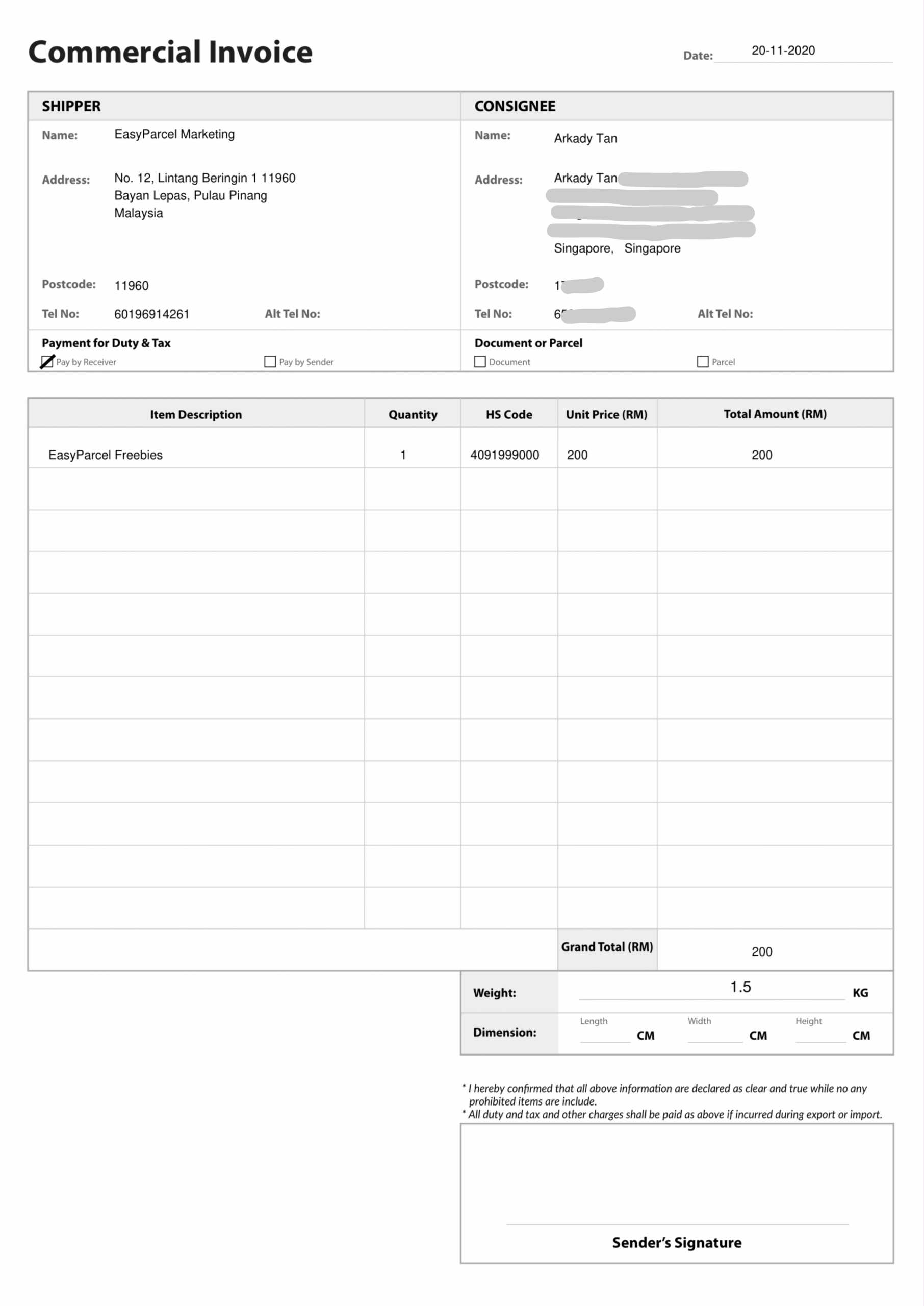
A commercial invoice is an important document used in international shipping that serves as both a customs declaration and a record of sale between a seller and a buyer. It includes details such as product descriptions, quantities, values, and seller and buyer information.
Customs authorities use the commercial invoice to verify shipments, assess duties and taxes, and ensure import regulations are met. In simple terms, it helps goods move across borders smoothly while confirming the details of the transaction.
Key Elements Included in a Commercial Invoice
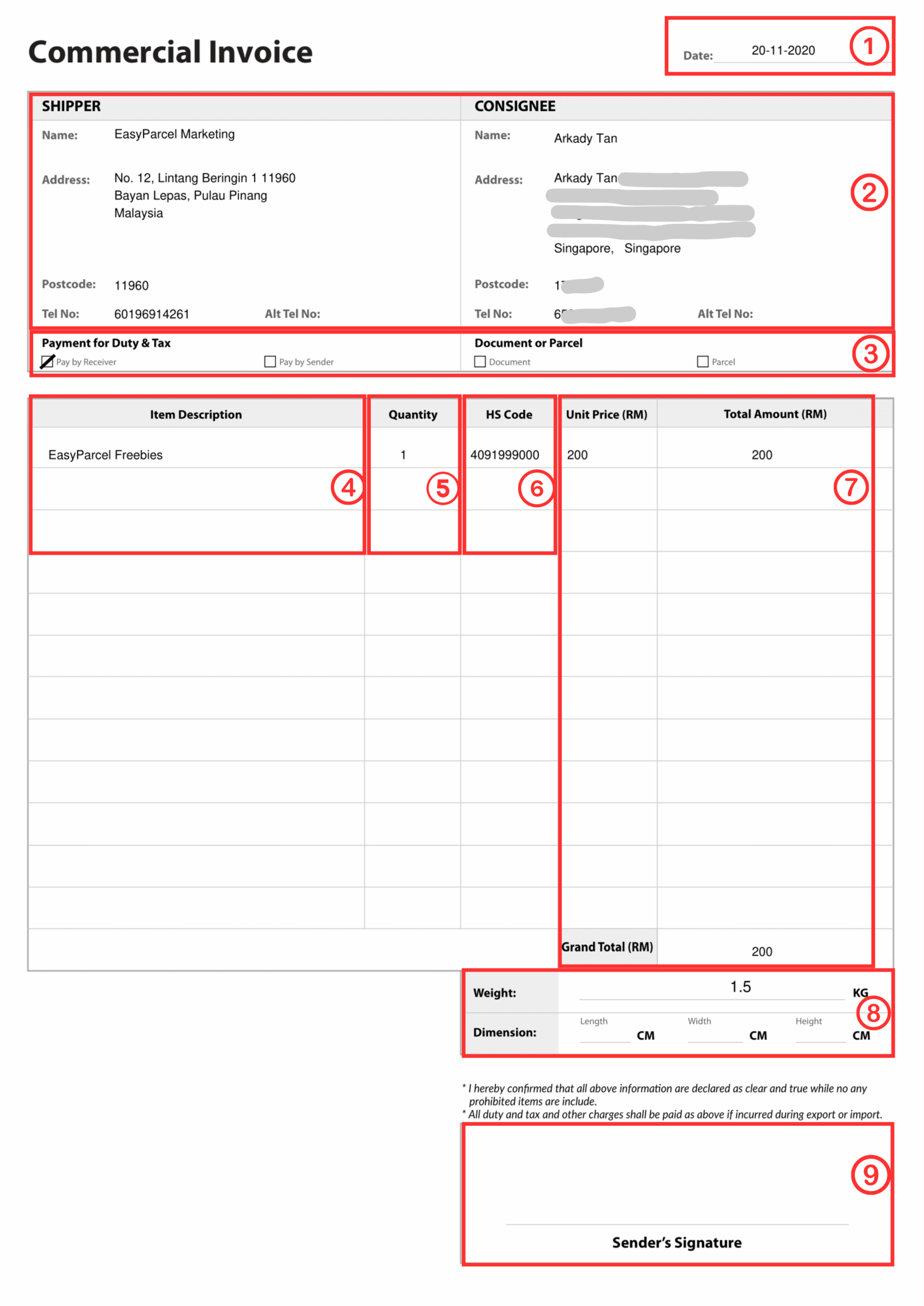
1. Date of Invoice
2. Seller and Buyer Information
Include the full names, addresses, and contact details of both the seller (shipper) and the buyer (consignee). This clearly identifies all parties involved in the shipment.
3. Payment & Shipment Type Section
Clearly state who is responsible for paying duties and taxes, and also indicate whether the shipment is a document or a parcel.
4. Item Description
Clearly describe what you are shipping. Write what the products are and explain their purpose or use.
5. Quantity
State the number of items you are sending.
6. HS (Harmonised System) Code
Add the HS code for each product. Customs uses this code to classify goods for import and export processing.
7. Unit Price and Grand Total
List the price of each item and mention the currency used, such as RM. Then calculate and include the total value of all goods in the shipment.
8. Weight and Dimensions
State the weight and dimensions of the shipment clearly. Include both net and gross weight, as well as the size of the package (length, width, and height). This helps with shipping cost calculation, handling, and customs processing.
9. Signature
Include the signature of the authorized person from the sender side. This confirms that all the information provided is correct and approved for shipment.
Why Commercial Invoices Matter in International Shipments?
Customs Clearance Requirement
These documents are required by customs authorities to process and clear international shipments.
Proof of Transaction
It serves as legal proof of the sale between the buyer and seller, showing what was shipped and its agreed value.
Declaration of Value & Description
It ensures goods are correctly declared with clear descriptions, HS codes, and total value, helping customs verify if the items are legal or restricted.
Commercial Invoice vs Other Invoice: What’s the Difference?
1. Purpose
Businesses use a commercial invoice mainly for international shipping and customs clearance. It provides detailed information about goods that businesses export or import. Companies use other invoices, such as standard or tax invoices, for domestic sales and payment requests.
2. Details
Commercial invoice includes detailed shipping information such as HS codes, country of origin, Incoterms, and declared value. Other invoices usually contain basic details like item description, quantity, unit price, and total amount.
3. Customs Requirement
Customs authorities require a commercial invoice to process and clear international shipments. They do not accept other invoices for customs clearance purposes.
4. Legal Function
Commercial invoice acts as a legal document for international trade, helping determine duties, taxes, and shipment compliance. Other invoices mainly serve as financial records or payment requests between buyer and seller.
Tips to Avoid Mistakes on a Commercial Invoice
1. Be Specific
Avoid unclear terms like “samples,” “parts,” or “accessories.” Instead, clearly describe each item, including what it is made of and its intended use. For example, write “100% cotton men’s t-shirt” instead of just “clothing.” Clear descriptions help customs correctly identify the goods.
2. Use Proper HS Codes
Always include the correct HS code for each product. HS codes help customs classify goods accurately and calculate the right duties and taxes. Using the wrong code can cause delays or incorrect tax charges.
3. Double-Check Party Details
Make sure the seller and buyer information is complete and accurate, including full names, addresses, and contact details. Incorrect information can cause delivery and customs issues.
4. Verify Quantity, Weight, and Value
Ensure the quantity of items, net and gross weight, and declared value are correct. All details should match your packing list and other shipping documents.
A commercial invoice is an important document for international shipping. It helps to ensure proper customs clearance and accurate shipment details.
Ready to send your international parcel? Start shipping with EasyParcel today! Sign up for FREE today and enjoy a RM10 discount coupon to kick-start your delivery!
FAQ about Commercial Invoice
1. What is a commercial invoice?
A commercial invoice is a document used for international shipping. It shows important details about the shipment such as the seller and buyer information, description of goods, quantity and value.
2. What is the difference between invoice and commercial invoice?
A regular invoice is used for payment between the buyer and seller, while a commercial invoice is a customs document that provides detailed information about the goods for international shipping.
3. Who provides a commercial invoice?
Commercial invoice will be provided along with air waybill whenever you book for any international couriers on EasyParcel. You can also create your own commercial invoice using this online invoice generator for FREE!