Singapore
 Thailand
 Indonesia
What if getting your parcel quickly could also help protect the planet? That’s what green logistics is about. It’s a simple idea: delivering goods in a more sustainable way.
So what does this actually mean for businesses and the future of delivery?
In this blog, you’ll discover everything about green logistics and how it is transforming the way goods are delivered in a more efficient, eco-friendly, and sustainable way.
Contents
What Is Green Logistics?
Source: Pinterest
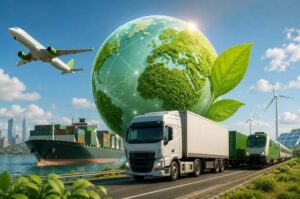
Green logistics means planning, managing, and improving supply chain activities in a way that reduces harm to the environment. It focuses on cutting pollution, saving energy, and reducing waste at every stage of the delivery process.
For example, the companies try to improve efficiency in several ways:
- Plan shorter and smarter delivery routes to save time and fuel
- Use fuel-efficient or electric vehicles to reduce emissions
- Switch to lighter, recyclable, or reusable packaging materials
- Improve warehouse operations to reduce energy use and waste
- Consolidate deliveries to avoid multiple trips
So it’s not just one change, it’s a mix of small improvements in transport, storage, and packaging that together help reduce environmental impact.
You might wonder, “Does it really make a difference?” Yes, it does. When millions of deliveries are made this way, it can significantly reduce pollution and save a lot of energy worldwide.
Why Green Logistics Matters for Businesses
1. Build a Stronger Brand Reputation ⭐
Customers today prefer environmentally responsible companies. Using eco-friendly practices like sustainable packaging and low-emission transport helps build trust and makes the brand more attractive.
2. More Partnerships Opportunity 🤝
Many large companies now choose suppliers based on their environmental performance. Businesses that adopt green logistics are more likely to secure partnerships and long-term contracts.
3. Easier Recruitment 👥
Companies with strong sustainability practices attract more skilled employees. Many job seekers prefer working for organizations that care about the environment.
4. Regulatory Compliance ⚖️
Governments are introducing stricter environmental rules. Green logistics helps businesses meet these requirements and avoid penalties or legal issues.
5. Long-term Business Sustainability 🔄
6. Lower Operating Costs 💰
Key Strategies in Green Logistics
1. Eco-Friendly Transportation
Source: Pinterest
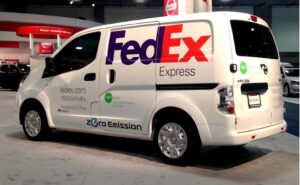
Eco-friendly transportation focuses on reducing emissions while maintaining efficient delivery performance. Companies are increasingly adopting electric vehicles (EVs) and cleaner fuels such as biofuels to lower carbon output.
In addition, AI-powered route optimization helps plan the most efficient delivery paths to reduce fuel consumption, traffic delays, and unnecessary trips. This improves both operational efficiency and environmental performance.
2. Sustainable Packaging

Sustainable packaging aims to reduce environmental impact by minimizing waste and improving material efficiency. Businesses are shifting from single-use plastics to recyclable, biodegradable, and reusable packaging materials.
At the same time, packaging design is being optimized to reduce size and weight, allowing more efficient use of transport space and lowering overall shipping emissions and costs.
3. Smart Warehouses
Source: Pinterest
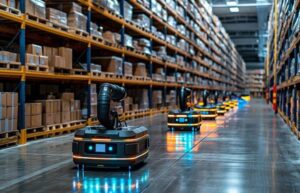
Smart warehouses integrate technology and energy-efficient systems to improve sustainability and productivity. Solutions such as solar energy, LED lighting, and automated systems help reduce electricity consumption and operational waste. Automation also enhances accuracy and speed in storage and order processing, supporting a more efficient and environmentally responsible supply chain.
4. Reverse Logistics
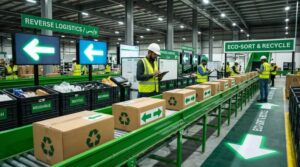
Source: Pinterest
Reverse logistics refers to the management of returned, reused, or recycled products within the supply chain. Instead of disposal, companies focus on repairing, refurbishing, recycling, or reusing materials and products. This approach reduces waste generation, extends product life cycles, and supports a more circular and sustainable logistics system.
5. Digitalization

Source: Pinterest
Digitalization can improves efficiency and sustainability in logistics operations. Technologies such as Artificial Intelligence (AI), Internet of Things (IoT), big data, and cloud computing enable real-time tracking, demand forecasting, and route optimization. These tools help businesses reduce errors, improve decision-making, and lower overall environmental impact across the supply chain.
The Challenges of Green Logistics: What Makes It Hard to Go Green
High Initial Costs
Businesses need to invest in electric vehicles, new technologies, energy-efficient warehouses, and sustainable packaging.
Limited Infrastructure Support
In many areas, the infrastructure for green logistics is still developing. A lack of EV charging stations, recycling facilities, and clean energy systems makes it harder for companies to fully adopt sustainable practices.
Operational Complexity
Green logistics requires careful planning and coordination across the entire supply chain. Businesses must track data, manage routes, and optimize resources while still maintaining fast and reliable delivery performance.
Lack of Awareness and Skills
Some companies do not have enough knowledge or trained staff to implement green logistics effectively.
Balancing Cost, Speed, and Sustainability
Businesses face pressure to deliver quickly and at low cost while also reducing environmental impact.
The Futures of Green Logistics: What’s Next for the Industry
Growth of Electric and Low-Emission Vehicles
More delivery fleets will shift to electric, hybrid, and other low-emission vehicles to reduce air pollution and carbon emissions.
Smarter Use of Technology
AI, big data, and automation will help companies plan better routes, reduce empty trips, and improve delivery efficiency.
Expansion of Renewable Energy in Logistics
Businesses get a single point of contact that handles all supply chain coordination, saving time and simplifying vendor management.
Rise of Circular Supply Chains
More businesses will focus on reusing, recycling, and refurbishing products instead of discarding them, helping to reduce overall waste.
Increased Customer Demand for Sustainability
Customers will continue to prefer brands that use eco-friendly delivery methods, pushing businesses to become more sustainable.
Let’s Get Eco-Friendly Courier Bags on EasyParcel!

EasyParcel’s courier bags are made from recyclable materials, which means they don’t just get thrown away after use—they can be collected, processed, and turned into new products again. So every time you choose recyclable courier bags, you’re not just sending a parcel—you’re also helping to send a greener future.
Click here to learn more about our eco-friendly courier bags.
Green logistics is no longer just a trend—it is becoming an essential part of modern business operations. Every small improvement helps reduce environmental impact while improving efficiency.
With EasyParcel, you can enjoy a simple, fast, and reliable way to send your parcels anytime, anywhere. Sign up for FREE today and enjoy a RM10 discount coupon, and start shipping with EasyParcel.
FAQs
1. What is another name for green logistics?
Green logistics is also known as sustainable logistics or eco-friendly logistics. It focuses on managing supply chain activities in a way that reduces environmental impact, such as lowering carbon emissions, saving energy, and reducing waste.
2. What is the difference between traditional and green logistics?
Traditional logistics mainly focuses on speed, cost, and efficiency, often without considering environmental impact. In contrast, green logistics focuses on reducing pollution, saving energy, and using sustainable practices while still maintaining efficiency.
3. What are the main goals of green logistics?
The main goal of green logistics is to minimize the environmental impact of supply chains, warehousing, and transportation while maintaining efficient business operations.