Singapore
 Thailand
 Indonesia
Bill of Lading (B/L) one of the important documents in international shipping. It may look like just a piece of paper, but in reality, it acts as a receipt, contract, and proof of ownership all in one.
So let’s break it down together in this blog , what exactly is a bill of lading.
Contents
What Is Bill of Lading?
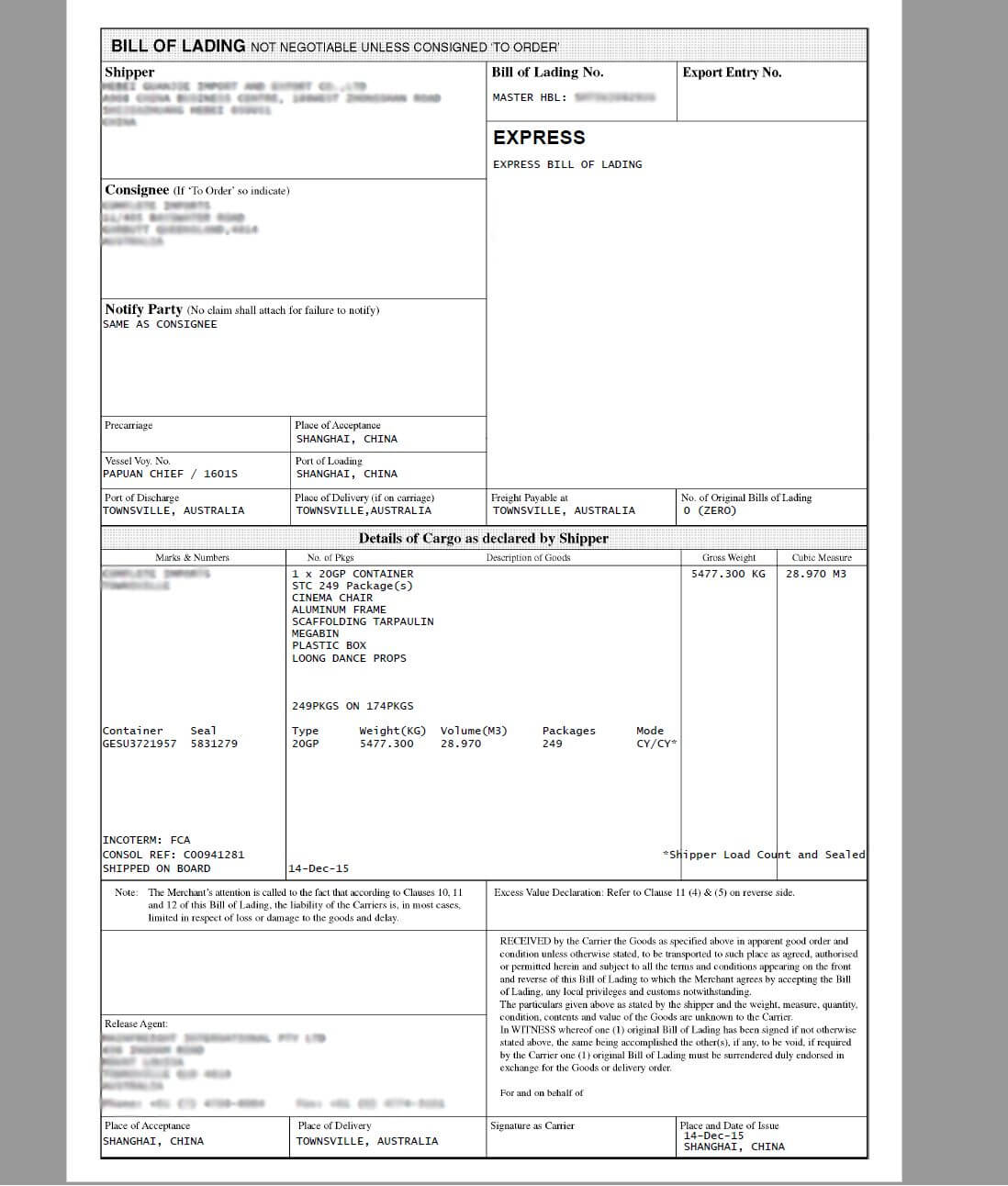
Source: Pinterest
A bill of lading is an important document in international shipping that confirms your goods have been received by a carrier and are now on their journey to the destination. But it’s more than just paperwork—it acts as a receipt for the cargo, a contract between the shipper and carrier, and proof of ownership, all combined into one powerful document.
In simple terms, it is a legally binding document issued by the carrier to the shipper, serving as proof that the goods have been received and will be transported under agreed conditions. Without it, global trade cannot move smoothly, securely, or with trust.
Key Elements Included in Bill of Lading
1. Shipper Details
Name and address of the party sending the goods.
2. Consignee Details
Name and address of the receiver of the cargo.
3. Carrier Information
The shipping line or transport company handling the shipment.
4. Port of Loading and Port of Discharge
The origin and destination of the shipment
5. Cargo Description
Details of the goods including type, quantity, and description.
6. Container and Seal Number
Identification numbers used for tracking and security.
7. Weight and Measurements
Gross weight, net weight, and volume (CBM).
8. Freight Details
Payment terms such as prepaid or collect.
9. Bill of Lading Number and Date
Unique reference number for tracking and documentation.
10. Special Instructions
Incoterms, handling requirements, or hazardous cargo information.
3 Types of Bill of Lading
1. Straight Bill of Lading
A straight b/l is the most direct and secure type of B/L, where the goods are released only to the specific consignee named in the document. No endorsement, no transfer, and no third-party claim is allowed—what is written is final.
2. Order Bill of Lading
An order b/l is where flexibility comes into play. Unlike a straight b/l, this one is negotiable, meaning ownership of the goods can be transferred by endorsement while the shipment is still moving across borders.
3. Bearer Bill of Lading
A bearer b/l is the most powerful and riskiest type. It gives ownership rights to whoever physically holds the document, meaning possession equals control of the goods.
3 Core Functions of Bill of Lading
Receipt of Goods
It as an official receipt issued by the carrier, confirming that the goods have been received in the stated condition and are ready for shipment.
Contract of Carriage
It serves as a legal agreement between the shipper and the carrier, outlining how, where, and under what conditions the goods will be transported.
Document of Title
Perhaps the most powerful function, it acts as a proof of ownership of the goods. Whoever holds the original document has the right to claim or transfer the cargo.
Bill of Lading (B/L) vs Air Waybill (AWB): What's the Difference?
| Feature | Bill of Lading (B/L) | Air Waybill (AWB) |
| Primary mode | Used for sea freight | Used for air freight |
| Ownership | Acts as a document of title, can prove ownership | Not a document of title, does not prove ownership |
| Transferability | Can be negotiable/transferable (depending on type) | Always non-negotiable and non-transferable |
| Cargo release | Requires original b/l for cargo release | Released directly to consignee without original document |
Why Bill of Lading Matter in International Shipments?
Proof of Shipment
Confirms that the goods have been received by the carrier and are on the way.
Legal Protection
Acts as a contract that protects both the shipper and the carrier.
Proof of Ownership
Only the holder of the B/L can claim the goods at the destination.
Smooth Trade Process
Helps customs, ports, and logistics move shipments without confusion.
Builds Trust
Ensures buyers and sellers can trade safely even across different countries.
Tips to Avoid Mistakes on Bill of Lading
Confirm Weight & Measurements
Make sure your weight is accurate and matches the actual parcel.
Match Cargo Description
Ensure product name, quantity, and weight match the actual shipment and commercial invoice.
Review Before Final Issuance
Always do a final check before the carrier issues the original b/l.
The bill of lading is a key document in international shipping that keeps everything clear and organized. It records shipment details, protects all parties, and allows goods to move smoothly across borders.
Ready to ship internationally with ease? Use EasyParcel to compare courier rates, book shipments, and manage your deliveries all in one place. Make your shipping process faster, simpler, and more cost-effective today.
FAQs
1. What is the purpose of a bill of lading?
A bill of lading is used as a receipt of goods, a contract of carriage, and a document of title. It confirms that the carrier has received the cargo and outlines how it will be transported and delivered.
2. What are the three types of bill of lading?
The three types of bill of lading are Straight Bill of Lading, which is non-transferable and issued to a specific consignee; Order Bill of Lading, which can be transferred through endorsement; and Bearer Bill of Lading, which allows the holder of the document to claim the goods.
3. When is a bill of lading required?
A bill of lading is required for most international sea freight shipments, especially when goods are being transported across borders and need to be legally released at the destination port.