Singapore
 Thailand
 Indonesia
In international trade, every shipment tells a story of where it comes from — and that story is proven through a Certificate of Origin (CO). This important document confirms the country where goods are manufactured, produced, or substantially transformed, making it a key requirement for customs clearance around the world.
So, what is a Certificate of Origin?
In this blog, we will guide you through everything you need to know about Certificate of Origin. Let’s dive in!
Contents
What Is Certificate of Origin (CO)?
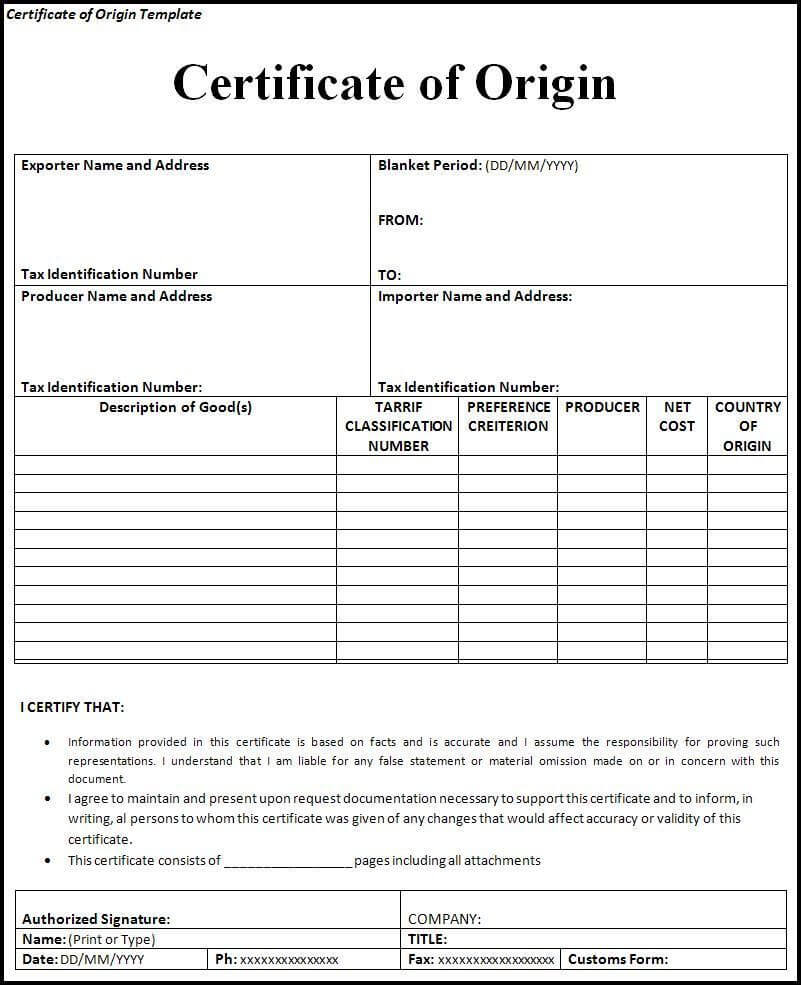
Source: Pinterest
A Certificate of Origin (CO) is an official document that confirms the country where a product is manufactured or produced. It plays an important role in international trade by helping customs authorities determine import duties, verify product origin, and ensure compliance with trade regulations.
This document is especially important when goods are exported, as it can affect the taxes paid and even whether a product qualifies for lower tariffs under trade agreements. In simple terms, a Certificate of Origin acts like a “passport” for goods, proving where they come from as they move across borders.
What Include in Certificate of Origin?
To ensure smooth customs clearance and avoid delays or penalties, it is important that all required information is correctly included and consistent with other shipping documents such as the commercial invoice. Below are the key elements that must be included in a Certificate of Origin:
1. Exporter Information
The CO must clearly state the exporter’s full name, address, and contact details. This identifies the party sending the goods and ensures accountability. The information should match other export documents to avoid discrepancies.
2. Importer Information
Details of the buyer, including name, address, and destination country, must be included. This helps customs authorities identify the receiving party and verify the shipment destination.
3. Producer Information
This refers to the manufacturer of the goods. It should include the producer’s company name, address, and country of production. If the exporter is also the producer, this should be clearly indicated.
4. Blanket Period (if applicable)
The blanket period must be included only if the CO covers multiple shipments. This section specifies the validity period with a start date and end date, while for single shipments it is usually marked as N/A.
5. Exporter and Producer Tax Identification Numbers
The tax identification numbers of both the exporter and producer must be included if required. These may include TIN, SST, VAT, or business registration numbers depending on the country’s regulations.
6. Importer Tax Identification Number
The importer’s tax identification number must be provided if required by the importing country. This may include VAT, GST, or business registration numbers used for customs verification.
7. Description of Goods
A clear and accurate description of the goods is required. This may include product type, model, material, or specifications. The description must be consistent with the commercial invoice to prevent clearance issues.
8. Quantity and Unit of Measurement
The quantity and unit of measurement must be stated in the CO. This may include pieces, cartons, or weight in kilograms, and it must match the packing list and invoice.
9. HS Code (Harmonized System Code)
The HS code is an internationally standardized classification number for traded products. It is used by customs authorities to determine duties, taxes, and import regulations.
10. Preference Criterion
The preference criterion must be stated when claiming tariff benefits under a Free Trade Agreement (FTA). This code explains how the goods qualify, such as being wholly obtained, produced in the exporting country, or meeting regional value requirements.
11. Producer Declaration
The producer declaration must indicate whether the goods were produced by the exporter or another manufacturer. This is usually stated as YES, NO, SAME AS EXPORTER, or UNKNOWN depending on the situation.
12. Net Cost (if applicable)
The net cost must be included if required under certain Free Trade Agreements (FTA). It represents the production cost of the goods excluding expenses such as shipping, marketing, and sales costs.
13. Country of Origin
The country of origin must be clearly stated in the CO. This refers to the country where the goods were manufactured or substantially transformed and is essential for determining tariff treatment.
14. Certification Statement
The certification statement must be included in the CO. This is a legal declaration confirming that all information provided is true, accurate, and complete, and that the exporter accepts responsibility for the declaration.
15. Exporter’s Declaration and Certification Authority
The exporter’s declaration must be signed by an authorized representative. The document must also be certified by an approved authority such as a Chamber of Commerce, which validates the authenticity of the CO with an official stamp and signature.
16. Number of Pages
The number of pages must be stated in the Certificate of Origin. This includes all pages and attachments to ensure the complete document is accounted for.
17. Signatory Details
The signatory details must be included in the CO. This consists of the printed name, company name, job title, and date of signing by the authorized person.
18. Contact Details
The contact details must be provided in the CO. This includes a phone number and fax number if available, or marked as N/A if not applicable.
19. Customs Form Reference
The customs form reference must be included based on the applicable trade agreement or customs requirement. This may include forms such as Form D, Form E, Form AI, Form AK, or other relevant certificates.
2 Types of Certificate of Origin
There are two main types of Certificate of Origin, and they serve different purposes:
1. Preferential Certificate of Origin
A Preferential Certificate of Origin is issued when goods qualify for reduced or zero import duties under a Free Trade Agreements (FTAs) between countries. This type of certificate allows businesses to enjoy tariff benefits when exporting products to partner countries.
It is commonly used in international trade agreements such as ASEAN Free Trade Area (AFTA) or other bilateral and regional trade deals. To qualify, products must meet specific rules of origin, proving that they are produced or sufficiently processed in the exporting country.
2. Non-Preferential Certificate of Origin
A Non-Preferential Certificate of Origin is used when goods do not qualify for any special trade agreement benefits. It simply certifies the country of origin of the product without offering any tariff reduction.
This type is mainly used for customs clearance, trade documentation, and compliance with import regulations. It helps importing countries verify where goods come from but does not affect import duty rates.
Key Difference Between Two Types of Certificate of Origin
| Feature | Preferential Certificate of Origin | Non-Preferential Certificate of Origin |
| Purpose | Used to get reduced or zero import duties under Free Trade Agreements (FTAs) | Used to confirm country of origin for general customs purposes |
| Benefits | Provides tariff advantages and cost savings | No tariff benefits, only proof of origin |
| Trade Agreement | Required under specific trade agreements (e.g., FTAs) | Not linked to any trade agreement |
| Customs Use | Helps reduce import taxes in partner countries | Used for standard customs clearance |
| Eligibility | Goods must meet specific rules of origin | No special conditions required beyond origin proof |
Why Certificate of Origin Very Important?
Supports Customs Clearance
Certificate of Origin helps customs authorities verify the origin of goods quickly and accurately. This speeds up the clearance process and reduces the risk of shipment delays at ports.
Prevents Trade Fraud
It ensures transparency by confirming the true country of origin of products. This helps prevent false declarations, illegal trade practices, and mislabeling of goods.
Enables Trade Agreement Benefits
Under Free Trade Agreement (FTAs), businesses may enjoy reduced or zero tariffs. A valid Certificate of Origin is required to prove eligibility for these benefits, helping reduce overall trade costs.
Determines Import Duties and Taxes
Many countries apply different tax rates depending on where a product comes from. The COO helps determine whether goods qualify for lower import duties or standard taxation.
Certificate of Origin vs Commercial Invoice: What’s the Real Difference?
In international trade, both the Certificate of Origin and the Commercial Invoice are essential documents used for customs clearance, but they serve different purposes.
| Feature | Certificate of Origin | Commercial Invoice |
| Purpose | Confirms the country where goods are produced or manufactured | Provides full details of the sale transaction between buyer and seller |
| Main Function | Used for customs verification and trade compliance | Used for payment, billing, and customs valuation |
| Issued By | Chamber of Commerce or authorized issuing body | Exporter or seller |
| Information Included | Country of origin of goods | Product details, quantity, price, and total value |
| Customs Role | Determines eligibility for trade agreements and duty rates | Used to calculate import taxes based on value |
How to Get a Certificate of Origin?
1. Check Eligibility

Source: Pinterest
First, you need to check whether your goods qualify for a Certificate of Origin. This depends on the destination country and whether the shipment is eligible for preferential or non-preferential treatment under trade agreements.
2. Prepare Required Documents
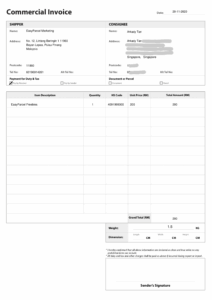
Next, you must prepare all supporting documents needed for the application. These usually include the commercial invoice, packing list, and bill of lading or air waybill, along with any other documents required by the trade agreement or the destination country.
3. Submit Application

Source: Pinterest
After preparing the documents, you need to complete and submit the Certificate of Origin application form to an authorised issuing body such as Malaysian International Chamber of Commerce and Industry (MICCI). All supporting documents must be submitted together for verification.
4. Verification and Approval

Source: Pinterest
The issuing authority will review your application and verify all submitted information. They may request additional clarification or inspection if needed. Once everything is confirmed, they will approve the CO and stamp or sign it officially.
5. Final Collection and Customs Use

Source: Pinterest
After approval, you can collect the certified Certificate of Origin. This document will then be used together with other shipping documents and submitted to customs authorities in the destination country for clearance.
Common Certificate of Origin Mistakes and How to Avoid Them
Before applying for a Certificate of Origin, it’s important to review all the information carefully. Even small errors can lead to customs clearance delays, additional costs, or the loss of preferential tariff benefits.
1. Double-Check Product Information
Ensure the product description, HS code, quantity, and specifications match your commercial invoice and packing list. Any mismatch may lead to customs delays or rejection.
2. Verify the Country of Origin
Confirm that the declared country of origin complies with the applicable rules of origin. Incorrect origin declarations can result in penalties or loss of preferential tariff benefits.
3. Use Consistent Business Details
Make sure the exporter and importer names, addresses, and contact details are accurate and consistent across all shipping documents.
4. Select the Correct Certificate of Origin Type
Different countries and trade agreements require different Certificate of Origin (CO) formats. Using the wrong type may cause customs to reject your shipment.
5. Check for Missing Information
Before submission, ensure all required fields are completed, including invoice number, shipment details, signatures, and dates. Blank fields can delay processing.
6. Review Supporting Documents
Cross-check your Certificate of Origin against the commercial invoice, packing list, bill of lading, and other shipping documents to ensure all information is consistent.
7. Apply Early
Don’t wait until the shipment is ready to apply for the Certificate of Origin. Applying early gives you time to correct errors without affecting delivery schedules.
Feeling overwhelmed by all the details needed for shipping documents like the Certificate of Origin? From exporter information and HS codes to customs forms and certification, it can quickly feel complicated and time-consuming to get everything right.
That’s where EasyParcel comes in. It simplifies the whole delivery process, helping you manage shipments in just a few clicks.
Ship Worldwide to 200+ Countries with EasyParcel

With EasyParcel, you can ship worldwide to over 200+ countries with ease. It connects you to over 60 courier services in one platform, so you can compare rates, book shipments, and manage deliveries all in one place.
This makes international shipping simple, cost-effective, and hassle-free—whether you’re sending small parcels or growing your global business.
For more information on shipping to different countries, you may refer here.
Certificate of Origin is more than just a shipping document—it is an important requirement in international trade that confirms where your goods are made. When prepared correctly, it helps ensure smooth customs clearance, avoids unnecessary delays, and allows businesses to enjoy benefits under Free Trade Agreements (FTAs).
Ready to simplify your international shipping process with EasyParcel? Sign up for FREE and enjoy a RM10 discount coupon now!
FAQs
1. How to get a Certificate of Origin in Malaysia?
To get a Certificate of Origin, Malaysian exporters need to apply through the Malaysian International Chamber of Commerce and Industry (MICCI). MICCI is authorised by the Ministry of International Trade and Industry (MITI) to issue Certificates of Origin for goods exported to any country in the world.
2. What is in a Certificate of Origin?
A Certificate of Origin contains basic shipment details like exporter and importer information, product description, HS code, country of origin, and quantity. It may also include invoice details, transport information, and tax numbers if needed. The document must be signed and stamped by an authorized body to be valid for customs.
3. Can I create my own Certificate of Origin?
No, in most cases you cannot self-certify a Certificate of Origin unless you are part of specific approved self-certification schemes under certain Free Trade Agreements. Generally, the CO must be issued or certified by an authorized chamber of commerce or issuing authority to be accepted by customs.
4. Who needs a Certificate of Origin?
A Certificate of Origin is needed by exporters and importers involved in international trade. Exporters need it to certify the origin of their goods, while importers require it for customs clearance, duty calculation, and to claim preferential tariff benefits under Free Trade Agreements (FTAs).