Singapore
 Thailand
 Indonesia
Ever clicked “place order” and wondered what actually happens next? You’re not alone. Behind every smooth online purchase, there’s a powerful system quietly working in the background. That system is called the Order Management System.
So, what is an Order Management System?
In this blog, we will cover everything you need to know about Order Management System. Let’s get started!
Contents
What Is Order Management System?
An Order Management System (OMS) is a digital platform that helps businesses handle every step of an order in one place. From the moment a customer clicks “buy” until the product is delivered and even returned if needed. Instead of tracking orders manually across spreadsheets, emails, and different platforms, everything is managed in a single, connected system.
It works like the “control center” of e-commerce and retail operations. An OMS keeps inventory updated in real time, processes orders automatically, connects with warehouses and couriers, and ensures customers get accurate updates on their purchases. This makes the entire order journey faster, more organized, and less prone to mistakes.
6 Main Types of Order Management System
Different types of OMS are designed for different business sizes, industries, and levels of complexity. It is important to understand that not all systems are the same.
1. Cloud-Based OMS
A cloud-based OMS is hosted online and accessed through a web browser as a subscription service (SaaS). It helps businesses manage orders, inventory, and fulfillment without needing heavy local IT infrastructure, making it highly flexible and easy to operate.
Best for:
- E-commerce brands
- Growing retailers
- Dropshipping businesses
Key benefits:
- Fast setup with minimal technical work
- Automatic updates and maintenance
- Easy to scale as order volume grows
2. Distributed Order Management (DOM)
A Distributed Order Management system intelligently routes and manages orders across multiple fulfillment points such as warehouses, retail stores, and third-party logistics providers. It ensures each order is fulfilled from the most efficient location.
Best for:
- Large retail chains
- Global e-commerce businesses
- High-volume omnichannel operations
Key benefits:
- Smart order routing for faster delivery
- Reduced shipping costs
- Optimized inventory across locations
3. Standalone OMS
A Standalone OMS is a dedicated system focused only on order processing and fulfillment. It works independently but can integrate with ERP, warehouse, or logistics systems when needed.
Best for:
- Fast-growing online sellers
- Businesses using separate ERP or warehouse tools
- Companies needing flexible order control
Key benefits:
- Easy integration with other systems
- Focused order management features
- Flexible workflow customization
4. ERP-Based OMS
An ERP-Based OMS is built inside a full Enterprise Resource Planning system that connects order management with finance, inventory, procurement, and other business functions in one platform.
Best for:
- Large enterprises
- Businesses with complex operations
- Companies needing centralized data management
Key benefits:
- All business data in one system
- Better accuracy and visibility
- Eliminates data duplication
5. E-commerce Platform OMS
This OMS comes built into or as an add-on for platforms like Shopify or WooCommerce. It is designed to handle orders directly from an online store with simple setup and operation.
Best for:
- Startups
- Small businesses
- Direct-to-consumer (D2C) brands
Key benefits:
- Low setup cost
- Easy to use with minimal training
- Direct integration with online stores
6. Manual Order Management
Manual order management uses spreadsheets, paper records, or basic tools to handle orders without automation. It is simple but becomes inefficient as order volume increases.
Best for:
- Very small businesses
- Local sellers with low order volume
- Early-stage startups
Key benefits:
- No software cost
- Simple to start
- Suitable for very basic operations only
Why Order Management System Very Important?
Faster Order Processing
It speeds up order handling by automating tasks like order confirmation, picking, and shipping, which reduces delays and improves efficiency.
Better Inventory Control
It provides real-time inventory tracking across all sales channels, helping businesses avoid overselling or running out of stock.
Multi-Channel Integration
It connects all sales platforms like online stores, marketplaces, and social media into one system for easier order management.
Efficient Returns Management
It simplifies returns and refunds by tracking reverse logistics properly, improving customer trust and operational control.
Reduced Human Errors
Automation reduces mistakes like wrong order entries, missed shipments, or incorrect inventory updates.
How Order Management System Works?
1. Order Tracking

Source: Pinterest
An OMS provides real-time visibility into every order throughout the fulfillment process. It automatically updates order statuses, allowing businesses and customers to monitor shipments from processing to delivery.
2. Inventory Management
Source: Pinterest
The system continuously tracks inventory levels and updates stock quantities whenever orders are placed, fulfilled, or returned. By analyzing historical sales data and demand trends, businesses can forecast inventory needs, prevent stock shortages, and avoid excess inventory costs.
3. Order Fulfillment
Source: Pinterest
Once an order is confirmed, the OMS automatically routes it to the appropriate warehouse or fulfillment center. It coordinates the picking, packing, and shipping process while ensuring inventory records remain accurate. This helps speed up order processing and improves fulfillment accuracy.
4. Returns Management

Source: Pinterest
When customers return products, the OMS tracks the return process and updates inventory accordingly. It also records return reasons and customer feedback, helping businesses identify issues, improve products, and create a smoother returns experience.
How to Choose the Right Order Management System?
Understand Your Business Needs
Before choosing an OMS, clearly identify your business size, order volume, and sales channels.
Look for Automation Features
Choose a system that supports automation such as automatic order processing, inventory updates, and shipping label generation.
Compare Cost vs Value
Don’t just choose the cheapest option. Look at the features you get, long-term scalability, and how much time and cost it saves your business in operations.
Check Ease of Use and Support
The system should be user-friendly so your team can learn it quickly. Also, strong customer support is important in case you face technical issues or need help during setup.
4 Common Challenges of Implementing an Order Management System
Employee Training and Adoption
Staff may find it hard to adapt to a new system, especially if they are used to manual processes.
High System Complexity
Some OMS are too complicated for small businesses to use effectively.
High Implementation Costs
Setting up an OMS can be expensive, especially for small and medium businesses. Costs may include software licensing, customization, integration, and ongoing maintenance.
Customization Limitations
Not all OMS solutions fit every business model. Some companies may find that the system does not fully support their workflows, requiring extra customization or workarounds.
What’s Next for Order Management System?
Order Management System are changing quickly as businesses move toward faster.
AI-Powered Automation
Artificial Intelligence is changing how order management works by removing most manual tasks. Instead of staff processing orders one by one, AI can automatically confirm orders, assign them to the right warehouse, and even detect potential delays.
Omnichannel Integration
Modern customers shop everywhere—online stores, marketplaces, and social media platforms. Future OMS will fully combine all these channels into one system, so businesses can manage everything in a single dashboard.
Predictive Inventory Management
Instead of just tracking stock, future OMS will predict what products are needed before they run out. By analyzing sales trends, seasonal demand, and customer behavior, the system can suggest when and how much to restock.
Logistics Integration
Order Management Systems will connect more deeply with courier and logistics providers. Instead of manually choosing a courier, the system can automatically select the best option based on price, delivery speed, and destination.
Cloud-Based Systems
Cloud-based OMS platforms are becoming the standard because they are flexible and easy to scale. Businesses can handle thousands of orders during peak seasons without system crashes or slow performance.
Streamline Your Shipping Experience with EasyParcel API
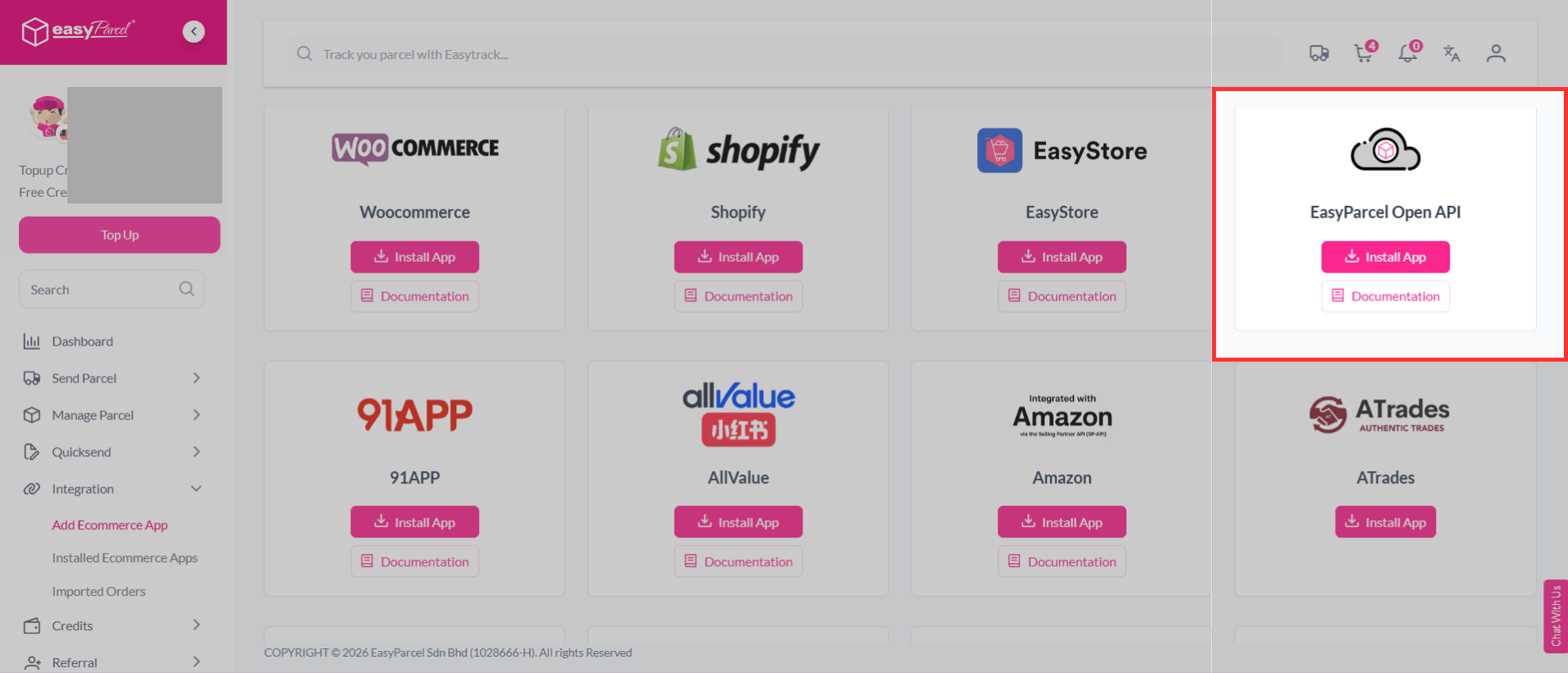
Want to make your shipping process faster and more efficient? EasyParcel API helps you automate and streamline your entire delivery workflow. It lets you compare courier rates, book deliveries, and generate shipping labels easily. You can track parcels in real time.
Click here to learn how to integrate the EasyParcel API.
An Order Management System is more than just a tool for processing orders—it serves as the backbone of efficient order operations. Whether you’re a growing ecommerce business or an established enterprise, an OMS can help you optimize your order management process and support long-term growth.
Ready to simplify your shipping experience with EasyParcel? Compare courier rates, book your deliveries and track every delivery in one simple platform.
FQAs
1. What is the order management system?
An Order Management System (OMS) is a software that helps businesses manage the entire order process in one place. It tracks orders from the moment a customer places an order until it is delivered. It also updates inventory, processes payments, and connects with warehouses and couriers to ensure smooth fulfillment.
2. Who needs an Order Management System?
Any business that sells products and handles many orders needs an OMS. It is useful for online sellers, shops, and businesses selling on multiple platforms like websites and marketplaces.
3. Can small businesses use an Order Management System?
Yes, small businesses can use an OMS. It helps them manage orders more easily, reduce mistakes, and save time even with a small team.