Singapore
 Thailand
 Indonesia
Have you ever wondered how your online orders reach your doorstep so quickly and smoothly? That’s where transportation management comes in.
Think of it like a traffic controller for deliveries—choosing the best routes, the right transport, and the perfect timing so everything arrives on time and at the lowest cost. With it, everything just flows smoothly from point A to point B.
In this blog, we’ll explore how transportation management actually works behind the scenes and why it plays such a big role in making deliveries faster, cheaper, and more reliable.
Contents
What Is Transportation Management?
Transportation management is the process of planning, optimizing, and controlling the movement of goods from one location to another. It ensures every shipment is delivered in the most efficient way—balancing speed, cost, and reliability.
Think of it as the “coordination engine” behind modern logistics. It decides the best routes, selects the right carriers, schedules deliveries, and tracks shipments in real time to keep everything on schedule.
Why Transportation Management Is Important in Logistics?
Reduces Logistics
Costs
By optimizing carrier selection, fuel usage, and delivery routes, businesses can significantly lower overall transportation and operational expenses.
Improves Customer Satisfaction
Reliable and timely deliveries increase customer trust, improve service quality, and encourage repeat purchases.
Improves Delivery Efficiency
It helps streamline delivery processes by planning better routes and schedules, ensuring goods reach customers faster and more reliably.
Supports Better Decision-Making
Transportation data and performance insights help businesses analyze trends, improve planning, and make smarter logistics decisions.
Transportation Management: Step-by-Step Process Explained
1. Order Receiving and Planning

Source: Pinterest
This is the first step where customer orders are received and all shipment details are collected. Information such as delivery address, package weight, size, urgency, and special handling requirements is analyzed. Based on this data, a basic transportation plan is created to decide how the shipment will be processed efficiently.
2. Route Planning and Optimization
Source: Pinterest
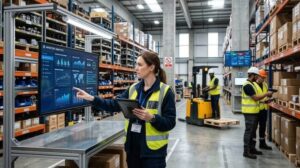
In this stage, the best possible delivery routes are calculated to ensure faster and more cost-effective transportation. Factors like traffic conditions, distance, road restrictions, and delivery time windows are considered. The goal is to reduce travel time, fuel consumption, and delays.
3. Carrier Selection
Source: Pinterest
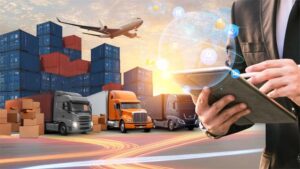
The most suitable carrier is chosen based on key factors such as price, delivery speed, reliability, and service coverage. Some systems compare multiple carriers automatically to ensure businesses select the most efficient and cost-saving option for each shipment.
4. Shipment Dispatch
Source: Pinterest
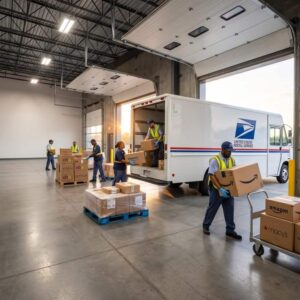
Once everything is confirmed, the goods are picked up from the warehouse or supplier and handed over to the selected carrier. Proper documentation and labeling are completed to ensure smooth movement through the delivery network.
5. Real-Time Tracking and Monitoring
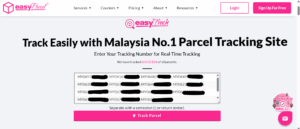
During transit, shipments are monitored in real time using tracking systems. This allows businesses and customers to see live updates, detect delays early, and ensure better transparency throughout the delivery process.
6. Final Delivery and Confirmation

Source: Pinterest
The shipment reaches its destination and is delivered to the customer. Proof of delivery (such as a signature or digital confirmation) is collected to verify successful completion and ensure accountability.
7. Performance Evaluation
Source: Pinterest
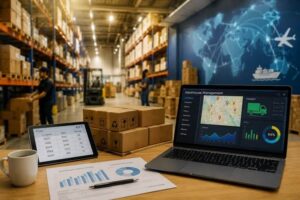
After delivery, the entire transportation process is reviewed. Key metrics such as delivery time, cost efficiency, carrier performance, and delay frequency are analyzed to identify improvements for future logistics operations.
Transportation Management vs Logistics Management: What’s the Real Difference?
Many people confuse transportation management with logistics management. Although both are closely related, there are key differences in their scope and functions.
| Feature | Transportation Management | Logistics Management |
| Focus | Focuses on moving goods from one point to another | Focuses on the entire supply chain process |
| Scope | Limited to shipping, routing, and delivery | Includes warehousing, inventory, packaging, and transportation |
| Main Goal | Ensure fast, and cost-efficient deliveries | Ensure smooth end-to-end supply chain operations |
| Key Activities | Carrier selection, route planning, and shipment tracking | Inventory control, storage, order fulfillment, and distribution |
| Delivery Experience | Transportation Management System (TMS) | Warehouse Management System (WMS) |
How to Improve Transportation Management Efficiency?
Compare Multiple Carriers
Choosing the right carrier based on price, speed, and reliability ensures more cost-effective shipping decisions, and EasyParcel helps you compare 60+ couriers instantly for the best option.
Implement Load Optimization
Maximizing truck or container space reduces the number of trips needed, lowering transportation costs and improving efficiency.
Improve Delivery Scheduling
Better scheduling ensures shipments are dispatched at optimal times, reducing congestion, waiting time, and missed delivery windows.
Automate Route Optimization
Smart route planning reduces travel time, fuel usage, and delivery delays by selecting the most efficient paths.
Use a Transportation Management System (TMS)
It helps automate logistics operations, improve planning, and increase visibility across shipments.
5 Common Challenges in Transportation Management
Delivery Delays
Delivery delays often happen due to traffic congestion, inefficient planning, or incorrect scheduling, which can disrupt the entire supply chain.
High Fuel and Shipping Costs
Rising fuel prices and inefficient transportation routes increase overall shipping expenses, making it harder for businesses to maintain cost efficiency.
Poor Route Planning
Without optimized routing, vehicles may take longer or more expensive paths, leading to wasted time, higher fuel usage, and delayed deliveries.
Unexpected Disruptions
Unplanned events such as bad weather, road accidents, or customs delays can interrupt delivery schedules and create uncertainty in transportation planning.
Carrier Coordination Issues
Poor communication between multiple carriers can cause mismanagement of shipments, missed handovers, and inconsistent delivery performance.
Future Trends in Transportation Management: What’s Coming Next
Transportation management is rapidly evolving with the rise of digital technologies and automation.
AI and Predictive Routing
Artificial Intelligence and machine learning are transforming route optimization by analyzing traffic, weather, and historical delivery data in real time. This helps predict delays, automate decisions, and improve delivery efficiency.
Integrated Telematics
Modern transportation systems now integrate with telematics devices to monitor vehicle performance, driving behavior, and cargo conditions such as temperature. This improves fleet safety, efficiency, and predictive maintenance.
Green Fleet Optimization
With rising environmental regulations, logistics companies are focusing on reducing carbon emissions through optimized routing, cargo consolidation, and the adoption of electric or hydrogen-powered vehicles.
End-to-End Visibility
Advanced systems provide full supply chain visibility beyond simple GPS tracking. Businesses can now share real-time data with partners, improving transparency and coordination across logistics networks.
Autonomous Freight Operations
The future of logistics includes self-driving trucks, drones, and connected vehicle systems. Transportation platforms are being designed to support automation and enable safer, more efficient freight movement.
Transportation management is a important part of logistics that ensures goods are delivered efficiently, on time, and at the lowest possible cost. It helps businesses improve planning, reduce operational delays, and maintain better control over their supply chain.
Take your transportation management to the next level with EasyParcel. Compare 60+ courier services instantly, choose the best rate, and manage your deliveries in just a few clicks.
FAQs
1. What is the meaning of transportation management?
Transportation management refers to the process of planning, organizing, and optimizing the movement of goods from one location to another in an efficient and cost-effective way. It ensures shipments are delivered on time, at the right cost, and with proper coordination across the supply chain.
2. What is the role of transport management?
The role of transportation management is to improve the efficiency of logistics operations by selecting the best carriers, optimizing delivery routes, reducing transportation costs, and ensuring timely and reliable delivery of goods.
3. How does transportation management work?
Transportation management works through a step-by-step process that includes order planning, carrier selection, route optimization, shipment dispatch, real-time tracking, final delivery, and performance evaluation. This structured workflow helps ensure smooth, efficient, and cost-effective movement of goods.