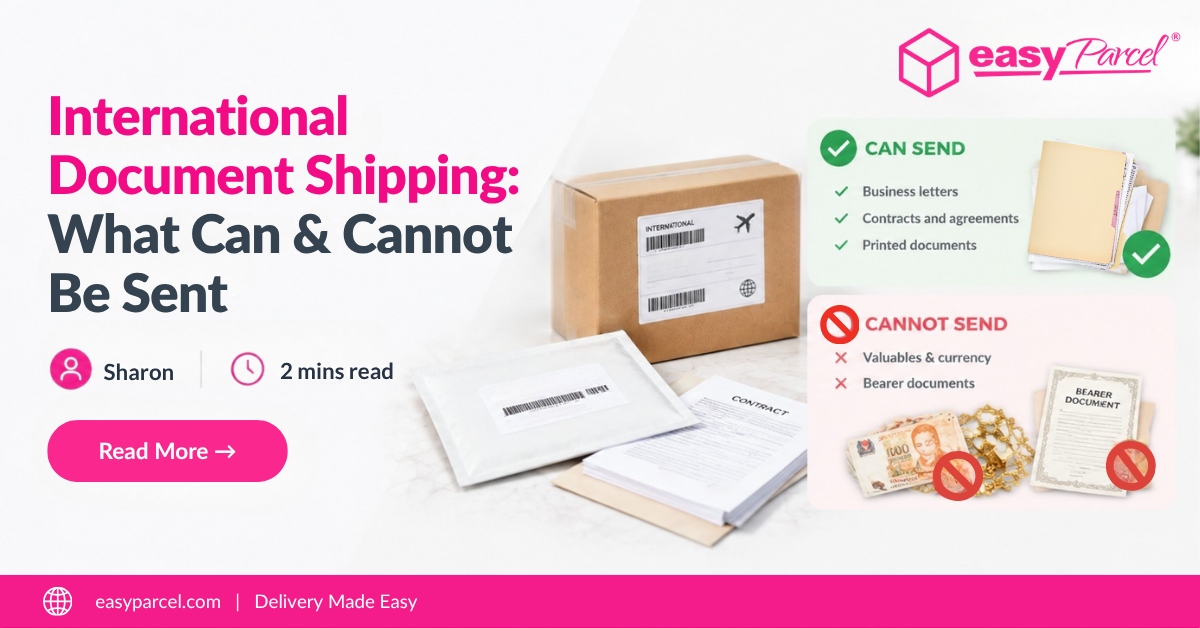
You have an envelope on your desk. Inside? A contract. A passport. A diploma. You need to send it overseas. But here’s what most first-time senders don’t know: Not everything fits in an international document shipment. Customs officers have strict rules. Put the wrong item in your envelope? Your shipment gets seized, returned, or destroyed. You lose your documents and your money.
This blog covers exactly what international document couriers accept and what they prohibit. Use this checklist before you ship.
Table of Contents
Part 1: What CAN Be Sent as an International Document
✅ General Correspondence
Letters, personal correspondence, and printed papers are the most common document items. For example, Birthday cards, Wedding invitations, thank you notes.
✅ Business Documents
Contracts, reports, invoices, proposals, and tender documents can all be sent as an international document. These have business value but are still considered documents because they are paper based.
✅ Educational Records
Academic transcripts, certificates, and diplomas are accepted as international document shipments. Always use a rigid envelope to prevent bending. Your diploma arriving creased is not a good look.
✅ Personal Documents
Passports, birth certificates, and visa applications fall under international document shipping.
Note: Some countries restrict original passports by courier. Check with your specific service provider before sending.
✅ Printed Material
Newspapers, magazines, catalogs, and brochures are allowed. However, if they have significant commercial resale value (like rare collectible magazines), customs may classify them as goods instead of documents.
✅ Drawings & Plans
Technical drawings, blueprints, and architectural plans are considered document items. Roll them in a sturdy tube, not a flat envelope.
✅ Legal Documents
Deeds, wills, and affidavits can be sent as documents. For original wills or deeds, add insurance. You cannot replace these.
Part 2: What CANNOT Be Sent as an International Document
❌ Valuables & Currency
Cash, bank notes, credit cards, prepaid cards, traveler’s cheques, precious stones, jewels, and gold/silver.
❌ Bearer Documents
Securities, stocks, bonds, or certificates payable to the bearer cannot be sent as an international document. These have financial value and require special handling.
❌ Original Passport (in some cases)
Some regulations restrict sending original passports by courier. Certain countries require passports to be hand-delivered or sent via government channels.
Note: For the full list of prohibited items in international document shipping, click here to view complete prohibited items list.
Ready to Send Your Document Overseas?

Part 3: Restricted Items for International Document Shipping
These items may be sent but require special handling, approval, or specific paperwork.
⚠️ Printed Items with Personal Data
Some countries have strict regulations on sending personal documents. Examples:
- China: Strict rules on sending personal identification documents
- Germany: Data privacy laws may restrict certain personal records
- Singapore: Personal data must comply with PDPA regulations
Solution: Check destination country import rules before shipping.
⚠️ Items of Cultural Value
Works of art, antiques, or historical documents require specific export/import documentation. These are rarely accepted as standard international document shipments.
Note: For more information on restricted items and country-specific regulations, click here to view complete prohibited and restricted items lists.