Singapore
 Thailand
 Indonesia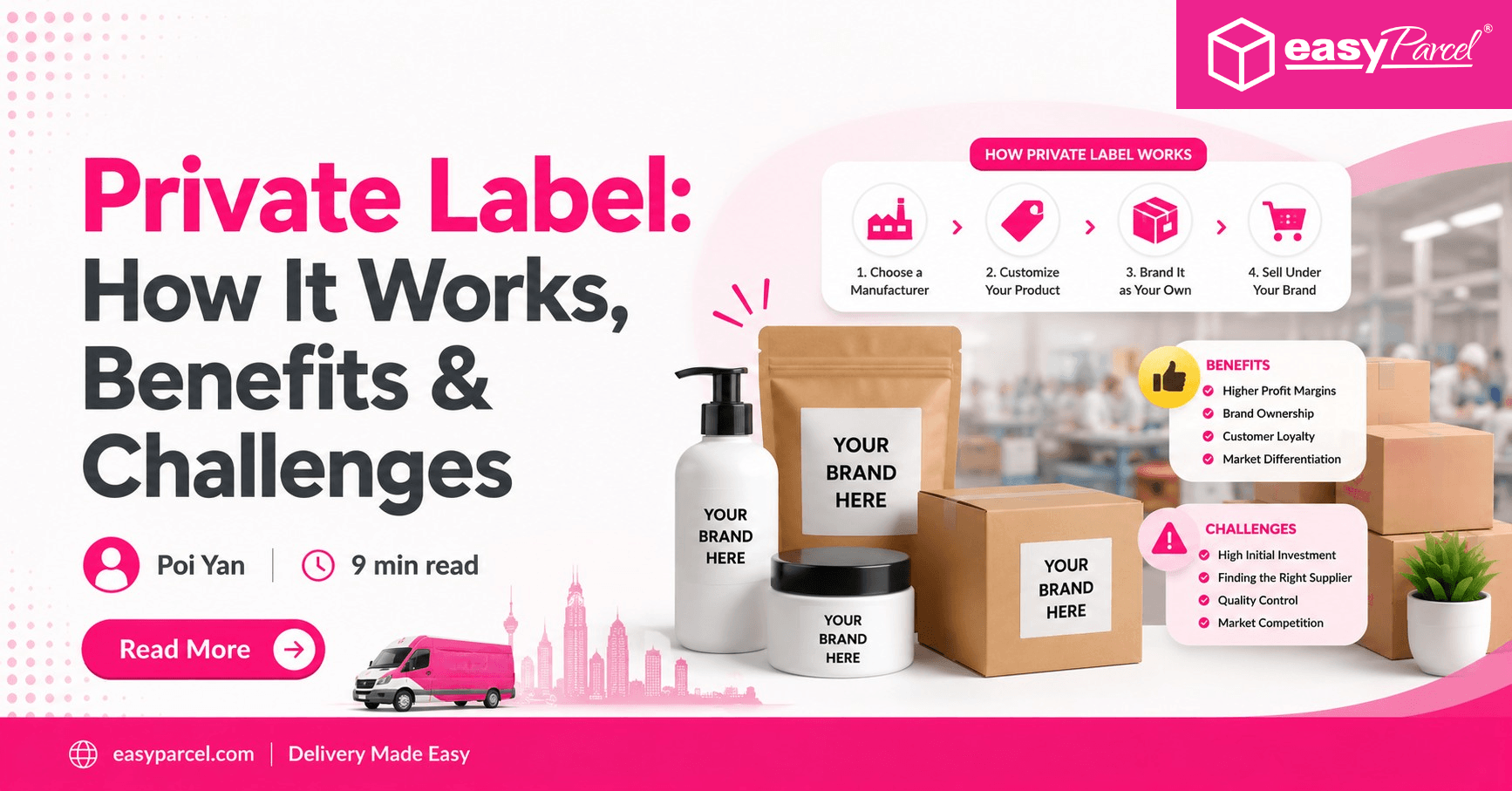
Want to build a brand without manufacturing every product from scratch? That’s where private label comes in. Private label products give businesses the opportunity to sell products under their own brand name while working with a third-party manufacturer.
But is private labeling the right choice for every business? In this guide, we’ll explore what private labeling means, how it works, its key benefits, and the hidden challenges businesses should know before getting started.
Contents
What Is Private Label?
Private label refers to products made by a third-party manufacturer but sold under a business’s own brand name. Instead of manufacturing products from scratch, businesses work with suppliers to produce products that can be branded, packaged, and marketed as their own.
This business model allows businesses to focus on building a strong brand, marketing products, and growing customer relationships without managing the entire manufacturing process themselves.
6 Best Private Label Products to Sell
Choosing the right product is an important step when starting a private label business. The best products usually have strong demand, good profit potential, and opportunities for branding or customization. Here are some popular private label product ideas:
1. Skincare and Beauty Products
Products such as facial cleansers, moisturizers, serums, and body care items are popular choices for building a beauty brand.
2. Clothing and Fashion Accessories
Businesses can create their own brand through products such as T-shirts, caps, bags, and other fashion accessories.
3. Home and Lifestyle Products
Items such as candles, kitchen accessories, storage solutions, and home décor can be branded and sold under a unique business identity.
4. Health and Wellness Products
Products such as fitness accessories, personal care items, and wellness products can attract customers interested in healthier lifestyles.
5. Pet Products
Pet owners are always looking for products such as pet accessories, grooming tools, toys, and feeding supplies, making this a popular niche for private label businesses.
6. Food and Beverage Products
Businesses can explore private label options such as snacks, coffee, tea, and other packaged food products, depending on local regulations and manufacturing requirements.
How Does Private Label Work?
1. Choose a Product

Source: Pinterest
Start by finding a product that matches the target market and customer needs. Businesses can research market trends, customer preferences, and competitors to find products with good sales potential.
2. Find a Reliable Manufacturer

Source: Pinterest
Next, look for a manufacturer that can produce the selected product. Compare factors such as product quality, production costs, minimum order quantities, and production time before choosing a supplier.
3. Customize the Product and Add Branding

Source: Pinterest
Work with the manufacturer to decide on the product details. Businesses can also add their brand name, logo, and packaging to make the product match their brand identity.
4. Order and Sell the Products

Source: Pinterest
Place an order with the manufacturer and wait for the products to be produced. Once ready, businesses can sell them through online stores, marketplaces, social media, or physical shops.
Private Label vs White Label: What’s the Real Difference?
Private label and white label may seem similar, but there are some key differences. Here’s a simple comparison to help businesses understand which option may be a better fit:
| Aspect | Private Label | White Label |
| Product | Made or customized for a specific brand | Pre-made product sold to multiple brands |
| Customization | More customization options | Usually limited customization |
| Branding | Business can create its own branding and packaging | Business adds its own branding to an existing product |
| Exclusivity | More potential for product differentiation | Less product uniqueness |
| Best For | Businesses building a unique product and brand | Businesses looking for a faster way to launch products |
What Are the Benefits of Private Label for Businesses?
Better Profit Margins
Private label products can offer higher profits because businesses can work directly with manufacturers, reduce middleman costs, and control pricing.
No Factory Costs
Businesses can sell products under their own brand without spending money on building or managing a manufacturing facility.
Easy to Scale
Private labeling makes it easier to increase or reduce production based on demand without investing in new equipment or expanding a factory.
Stronger Brand Loyalty
A unique private label product helps businesses build a recognizable brand that customers cannot easily find from competitors.
4 Hidden Challenges of Private Label
High Initial Costs
Businesses may need to spend money upfront on product development, packaging, samples, and minimum order quantities.
Minimum Order Requirements
Some manufacturers require businesses to order a large number of products, which can be difficult for new or small businesses.
Quality Control
Businesses need to check product quality carefully to make sure the products meet customer expectations.
Unsold Inventory
If products do not sell as expected, businesses may be left with extra stock and lose money.
The Future of Private Label: Key Trends to Watch
The private label industry continues to evolve as customer expectations and shopping habits change. Businesses that want to stay competitive should keep an eye on these key trends:
1. More Focus on Product Quality
Customers are becoming more careful about what they buy. Businesses are focusing on better ingredients, materials, and product quality to build trust and encourage repeat purchases.
2. Growing Demand for Sustainable Products
Eco-friendly packaging and sustainable products are becoming more popular. Businesses are exploring recyclable packaging, responsible sourcing, and greener production methods.
3. Personalized Products and Experiences
Customers increasingly value products that feel unique and relevant to them. Private label businesses may offer more customization in product design, packaging, and customer experiences.
4. Growth of E-commerce and Social Commerce
Online shopping and social media continue to create new opportunities for private label brands. Businesses can use e-commerce platforms, social media, and live shopping to reach customers and grow their brands.
5. Smarter Use of Technology
Technology and AI are helping businesses understand customer preferences, analyze trends, manage inventory, and create more personalized marketing campaigns.
6. Cross-Border E-commerce Expansion
Private label businesses can reach customers beyond their local markets through cross-border e-commerce. With the right logistics and delivery solutions, brands can expand into new markets and grow their customer base.
Got a private label product ready to sell? The next step is getting it into customers’ hands! EasyParcel helps you send parcels quickly and conveniently, making the delivery process smoother from the first order to the final doorstep.
Deliver Private Label Products Easily with EasyParcel!
Get Instant Quotes
Send More Parcels at Once
Save time, save cost with less click!
Integrations
Sync all your store orders and experience seamless booking experience in one click
Explore NowWith 60+ courier services available in one platform, you can compare rates instantly, choose the best option for your needs, and book shipments with ease.
From small online orders to bulk deliveries, EasyParcel helps you save time and shipping costs while ensuring your products reach customers reliably and on time.
Private label can be a great way for businesses to build their brand. It gives businesses the opportunity to bring products to the market under their own name, and create more opportunities for business growth.
Ready to simplify parcel delivery? Sign up for FREE today and enjoy a RM10 discount coupon on your first delivery with EasyParcel!
FAQs
1. What is an example of a private label?
An example of a private label is a skincare brand that works with a manufacturer to produce facial cleansers or serums and sells them under its own brand name and packaging.
2. How does private labeling work?
Private labeling starts with choosing a product and finding a suitable manufacturer. The business then works with the manufacturer to produce the product, adds its own branding and packaging, and sells it under its own brand name.
3. Is private label the same as white label?
No, private label and white label are not exactly the same. Private label products are often customized for a specific brand, while white label products are usually pre-made and sold by different businesses under their own brand names.