Singapore
 Thailand
 Indonesia
Ever wondered how fresh seafood, frozen foods, or life-saving vaccines stay in perfect condition before reaching consumers? The answer lies in cold storage warehouse. These specialized facilities are designed to keep temperature-sensitive products at carefully controlled temperatures, ensuring they remain fresh, safe, and high quality throughout the supply chain.
So, what exactly is a cold storage warehouse, and why is it so important? In this blog, we’ll cover everything you need to know about cold storage warehouses. Let’s get started!
Contents
What Is Cold Storage Warehouse?

Source: Pinterest
A cold storage warehouse is a temperature-controlled facility designed to store products that need to be kept at specific temperatures to maintain their quality, freshness, and safety. Unlike a standard warehouse, a cold storage warehouse uses refrigeration systems to create controlled environments ranging from chilled to frozen conditions, depending on the type of goods being stored.
Cold storage warehouses play an important role in the cold chain logistics, ensuring that temperature-sensitive products remain in optimal condition from production to final delivery. By maintaining consistent temperatures throughout the storage process, businesses can reduce spoilage, extend product shelf life, and comply with food safety and industry regulations.
Types of Cold Storage Warehouse
Not all temperature-sensitive products require the same storage conditions. Different products have different temperature requirements to maintain their quality, safety, and shelf life. To meet these needs, cold storage warehouses are designed with various temperature ranges and storage environments.
Here are the four main types of cold storage warehouses:
1. Chilled Storage
Chilled storage maintains temperatures between 0°C and 8°C, making it ideal for products that need refrigeration but should not be frozen. It helps preserve freshness while slowing the growth of bacteria.
Common products include:
- Fresh fruits and vegetables
- Dairy products
- Fresh flowers
- Ready-to-eat meals
- Beverages
2. Frozen Storage
Frozen storage typically operates at -18°C or below to keep products completely frozen. This type of storage prevents spoilage, preserves product quality, and extends shelf life.
Common products include:
- Frozen meat and poultry
- Seafood
- Frozen vegetables
- Ice cream
- Frozen ready meals
3. Deep Freeze Storage
Deep freeze storage maintains extremely low temperatures, usually between -30°C and -40°C or even lower. It is used for products that require long-term preservation or strict temperature control.
Common products include:
- Premium seafood
- Medical and pharmaceutical products
- Vaccines
- Biological samples
- Specialty frozen foods
4. Multi-Temperature Storage
Multi-temperature warehouses feature separate storage zones with different temperature settings within the same facility. This allows businesses to store a variety of products under their ideal conditions without needing multiple warehouses.
Common products include:
- Mixed food products
- Grocery items
- Pharmaceuticals
- Temperature-sensitive consumer goods
Why Cold Storage Warehouses Matter More Than Ever?
Preserve Product Freshness and Quality
It maintains consistent temperatures that help preserve the freshness, taste, texture, and nutritional value of perishable products.
Support the Cold Chain
A cold storage warehouse is a vital link in the cold chain, ensuring temperature-sensitive products remain within the required temperature range from production to final delivery.
Reduce Product Spoilage and Waste
It extends product shelf life by slowing bacterial growth and maintaining ideal storage conditions, helping businesses reduce inventory losses.
Ensure Food Safety and Regulatory Compliance
It helps businesses comply with industry standards by continuously monitoring storage conditions, reducing the risk of contamination and ensuring products remain safe for consumption.
How Cold Storage Warehouse Work?
1. Receiving Goods

Source: Pinterest
When products arrive at the warehouse, they are immediately checked for quality, quantity, and temperature condition. Items are verified against shipment documents before being quickly transferred into the correct storage area to avoid exposure to warm temperatures.
2. Temperature-Controlled Storage
Source: Pinterest
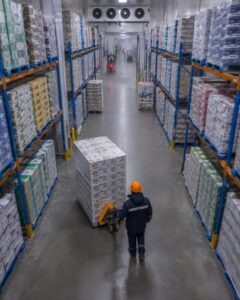
Products are stored in specially designed zones based on their required temperature range, such as chilled, frozen, or deep-freeze areas. Strong insulation, refrigeration units, and automated cooling systems help maintain stable temperatures 24/7.
3. Inventory Management

Source: Pinterest
Cold storage warehouses use Warehouse Management Systems (WMS) to track inventory in real time. Every product is labeled with batch numbers, expiry dates, and storage locations. This allows efficient stock rotation using methods like FIFO (First In, First Out) or FEFO (First Expired, First Out). Proper inventory control helps reduce waste, prevent stockouts, and ensure compliance with food safety standards.
4. Order Picking and Packing
Source: Pinterest
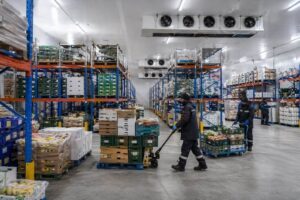
When an order is placed, warehouse staff retrieve items based on priority rules to ensure older stock is used first. Products are picked quickly to minimize exposure outside controlled environments. After picking, items are packed using insulated materials or temperature-controlled packaging to maintain product integrity during handling. This step is critical to preserving freshness before dispatch.
5. Cold Chain Distribution

Source: Pinterest
The final step involves transporting goods using refrigerated trucks or temperature-controlled delivery systems. The goal is to maintain a continuous cold chain from warehouse to customer. Logistics partners coordinate closely with the warehouse to ensure timely delivery, reducing the risk of temperature breaks that could damage sensitive products.
Cold Storage Warehouse vs Standard Warehouse: What's the Difference?
Although both cold storage warehouse and standard warehouse are designed to store goods, they serve different purposes.
| Aspect |  Cold Storage Warehouse Cold Storage Warehouse |  Standard Warehouse Standard Warehouse |
| Temperature Control | Maintains specific chilled or frozen temperatures to protect temperature-sensitive products | Typically operates at ambient room temperature with no refrigeration systems |
| Products Stored | Stores perishable goods such as food, beverages, pharmaceuticals, and vaccines | Stores non-perishable products such as electronics, clothing, furniture, and general merchandise. |
| Shelf Life Protection | Helps extend product shelf life and maintain freshness by controlling temperature | Does not provide temperature protection, making it unsuitable for perishable items |
| Operating Costs | Higher operating costs due to refrigeration systems, energy consumption, and temperature monitoring | Lower operating costs as no specialized cooling equipment is required |
| Industry Use | Commonly used in food & beverage, healthcare, pharmaceutical, and cold chain logistics industries | Widely used across retail, eCommerce, manufacturing, and general warehousing sectors |
5 Tips for Choosing the Right Cold Storage Warehouse
Evaluate the Warehouse Location
Choose a warehouse that is strategically located near your suppliers, customers, or major transportation hubs.
Check Temperature Control Capabilities
Ensure the warehouse offers the appropriate temperature range—whether chilled, frozen, or deep-freeze—and has reliable temperature monitoring systems to maintain consistent storage conditions.
Verify Safety Standards and Certifications
Look for facilities with relevant certifications and strict quality control processes to ensure your products are stored safely and meet regulatory requirements.
Assess Storage Capacity and Scalability
Choosing a warehouse with flexible storage capacity allows your business to scale efficiently without the need to switch providers as demand increases.
Ensure Reliable Backup Systems
A dependable cold storage warehouse should have backup generators and emergency response plans to maintain continuous refrigeration during unexpected disruptions.
Common Challenges in Cold Storage Warehousing
Temperature Fluctuations
Even minor temperature changes can affect the quality, freshness, and safety of perishable goods.
Managing Perishable Inventory
Products such as fresh food, dairy, seafood, and pharmaceuticals have limited shelf lives and require careful inventory management.
Maintaining the Cold Chain
The cold chain must remain unbroken from storage to transportation and final delivery. Any interruption can result in product spoilage, reduced quality, and financial losses.
Complex Compliance Requirements
Cold storage operators must follow strict food safety and pharmaceutical regulations.
Inventory Turnover Pressure
Cold storage requires fast inventory movement due to product perishability. Poor demand forecasting can lead to overstocking or stock shortages, affecting efficiency and profitability.
After your chilled or perishable products leave the cold storage warehouse, the next step is ensuring fast and safe delivery to your customers. EasyParcel makes this process easy, giving you a simple, fast, and hassle-free way to manage deliveries.
Reliable Cold Delivery with Celsius Express on EasyParcel

Need to send frozen or chilled goods? With EasyParcel’s courier partner Celsius Express, you can now enjoy reliable temperature-controlled delivery for your perishable products.
Click here to learn more about Celsius Express.
Cold storage warehouses play a vital role in today’s supply chain by keeping temperature-sensitive products fresh, safe, and high quality. From food and beverages to pharmaceuticals, these facilities ensure proper temperature control, reduce waste, and support efficient logistics from storage to delivery.
Need a reliable logistics partner for your cold chain shipments? EasyParcel makes it simple to compare, book, and manage your deliveries with trusted courier partners. Sign up for FREE and enjoy a RM10 discount coupon now!
FAQs
1. What is a cold storage warehouse?
A cold storage warehouse is a temperature-controlled facility designed to store perishable and temperature-sensitive products. It uses refrigeration systems to maintain chilled or frozen conditions, helping preserve product freshness, safety, and quality.
2. What is the main purpose of cold storage warehouse?
The main purpose of a cold storage warehouse is to maintain the required temperature conditions for perishable goods. This helps extend shelf life, prevent spoilage, ensure food safety, and support a reliable cold chain from storage to delivery.
3. What are the four types of cold storage warehouse?
The four main types of cold storage warehouses are chilled storage (0°C to 8°C) for fresh products like dairy and vegetables, frozen storage (-18°C or below) for items such as meat and seafood, deep freeze storage (below -30°C) for long-term preservation of sensitive goods like vaccines, and multi-temperature storage, which allows different temperature zones within the same facility for various product types.
4. What products need cold storage?
Products that require cold storage include fresh fruits and vegetables, meat, seafood, dairy products, frozen foods, pharmaceuticals, vaccines, and other temperature-sensitive items that can spoil or lose quality at room temperature.