Singapore
 Thailand
 Indonesia
If you’re a Malaysian online seller, “fulfillment” can feel like the part of ecommerce that grows messy the moment orders start coming in daily: stock scattered between your home, a rented storeroom, and a supplier; parcels to pack at midnight; and customers asking, “Can it arrive tomorrow?” That’s where a fulfillment center comes in.
A fulfillment center is a specialized warehouse built to handle the ecommerce order fulfillment process end-to-end—receiving inventory, storing it, processing orders, warehouse picking and packing, shipping, and even shipping and returns management. Instead of you doing everything, you outsource the operational workload to a provider (often a third party logistics 3PL) so you can focus on product, marketing, and customer experience.
This beginner’s guide breaks down what is order fulfillment, how a fulfillment center fits into the wider supply chain, what it costs, and how Malaysian SMEs can choose the right partner.
Contents
What Is a Fulfillment Center (In Simple Terms)?
Source: Pinterest
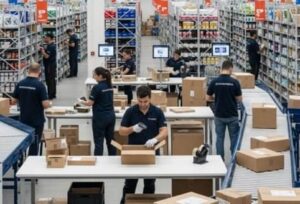
A fulfillment center is a warehouse designed for speed and accuracy in processing many small, frequent ecommerce orders. It’s different from a general storage warehouse because the core job isn’t just keeping stock—it’s moving items quickly from shelf to customer, day after day.
A typical fulfillment workflow looks like this:
- Inbound receiving: Your stock arrives at the facility.
- Put-away & storage: Items are stored in assigned bins/racks.
- Inventory tracking: Stock levels are updated (often via inventory management systems or warehouse management system).
- Order processing: Orders flow in from your ecommerce platform/marketplace.
- Pick & pack: Staff pick items, pack them, and label parcels.
- Shipping handoff: Parcels are handed to courier networks
- Returns handling: Returned items are inspected, restocked, or disposed.
The goal: Faster dispatch, fewer mistakes, and the ability to scale without hiring your own warehouse team.
Fulfillment vs Distribution Center: What’s the Difference?
New sellers often mix up a fulfillment center and a distribution center. They’re related, but their priorities differ.
Fulfillment center
- Focus on B2C orders (single-item or small-basket orders)
- High volume of small packages
- Strong emphasis on pick/pack accuracy, speed, and branded packing options
- Usually supports returns and customer-centric workflows
Distribution center
- Focus on B2B or bulk movement (cartons/pallets)
- Shipping to retail outlets, wholesalers, or other warehouses
- Optimized for large shipments and replenishment, not individual parcel packing
In short, fulfillment vs distribution center comes down to “many small orders to consumers” vs “fewer large shipments to businesses.” Some providers operate hybrid facilities, but the processes and cost structures can differ significantly.
Where a Fulfillment Center Fits in Your Supply Chain
Your supply chain starts upstream (manufacturing/importing) and ends with delivery and after-sales service. A fulfillment center sits in the “middle-mile + last-mile preparation” zone:
- Upstream: Supplier → import/production → inbound transport
- Midstream: Storage + order processing (fulfillment center)
- Downstream: Courier pickup → last-mile delivery → returns/refunds
For Malaysian SMEs selling across Shopee, Lazada, TikTok Shop, Instagram, or Shopify, fulfillment becomes the operational engine that keeps your storefront promises realistic—especially when promotions spike demand. If you’re in the “growing but not ready to outsource everything” phase, tools like EasyParcel’s Bulk Upload can also help you manage bulk dispatch without adding headcount.
What Fulfillment Services Typically Include (and What’s Optional)
Most fulfillment services are modular. Understanding what’s included helps you avoid surprises and compare providers fairly.
Core services
- Inbound receiving and stock check-in
- Storage (bin/rack/pallet)
- Order processing
- Warehouse picking and packing
- Packing materials (sometimes charged separately)
- Courier label printing and dispatch
Common add-ons
- Kitting and bundling (e.g., “gift set” or promo packs)
- Custom packaging inserts (thank-you cards, samples)
- Serial/batch tracking (useful for cosmetics/supplements)
- Quality checks (QC)
- Returns processing (inspection + restocking rules)
- Cross-border preparation and documentation (depending on provider)
A key operational backbone is the provider’s inventory management systems WMS, which syncs stock levels, tracks locations, and improves traceability. On the shipping side, if you’re coordinating multiple courier options and want faster label generation at scale, EasyParcel’s Bulk Upload can complement your process.
Inventory Management: The Real Make-or-Break for Sellers
Source: Pinterest
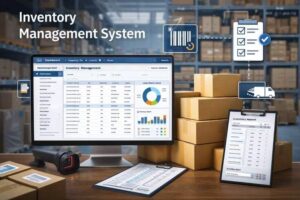
Many fulfillment problems are actually inventory management problems. If stock counts are off, you oversell. If SKU mapping is wrong, you ship the wrong variant. If reorder timing is late, you lose ranking and momentum during campaigns.
A good fulfillment partner uses:
- Real-time or near-real-time inventory visibility
- Barcode-driven workflows
- Defined inbound QA (counting, labeling, damaged stock handling)
- Regular cycle counts
Inventory management systems WMS: what to look for
When evaluating inventory management systems WMS, check for:
- SKU-level tracking (variant accuracy is crucial for apparel/beauty)
- Lot/batch tracking if you need expiry control
- Multi-channel syncing (marketplaces + own website)
- Alerts for low stock
- Reporting (fast movers, aging stock, stock turns)
If the WMS can’t integrate cleanly with your selling channels, you’ll end up doing manual reconciliation—exactly what you were trying to escape.
Inside the Ecommerce Order Fulfillment Process (Step-by-Step)
Understanding the ecommerce order fulfillment process helps you spot weak points and ask smarter questions.
1. Order import and validation
Orders come in from marketplaces or your webstore. Validation checks might include:
- Address format
- Payment confirmation
- Shipping method selected
- Fraud flags (for high-risk orders)
If you’re dispatching many orders daily, having a clean bulk upload/import flow for shipments can remove a huge admin burden—this is exactly what EasyParcel’s Bulk Upload is designed for.
2. Picking (how items are selected)
Picking methods affect speed and accuracy:
- Single-order picking (simple, slower at scale)
- Batch picking (faster for high volume)
- Zone picking (warehouse split into zones)
- Wave picking (scheduled waves tied to carrier cut-offs)
3. Packing (how parcels are prepared)
Packing includes:
- Right-size packaging (reduces shipping cost and damage)
- Protective materials for fragile items
- Inserts (optional)
- Label printing and verification
4. Dispatch and carrier handoff
This is where delivery time is won or lost. A provider with later cut-off times or multiple daily pickups can help you push faster SLAs. If you run a hybrid setup, you can also speed up dispatch by generating labels in batches and arranging pickups through EasyParcel’s Bulk Upload.
5. Returns and exceptions
Returns aren’t just “reverse shipping.” You need rules:
- What is restockable?
- Who pays return shipping?
- How are damaged items recorded?
- How quickly are refunds triggered?
That’s the heart of shipping and returns management—and it can protect your ratings.
Barcode Scanning Automation Benefits (Accuracy + Speed)
If you’ve ever sent the wrong colour, size, or bundle, you already know the cost: refunds, negative reviews, and time spent apologizing.
One of the highest ROI upgrades in fulfillment is scanning. Barcode scanning automation benefits include:
- Reduced mis-picks through scan-to-confirm picking
- Faster receiving and put-away
- Better cycle counts and audit trails
- Improved inventory accuracy (less overselling)
- Faster training for new staff (scan workflows are easier to standardize)
Ask providers whether they scan at receiving, picking, and packing (three checkpoints is ideal), and whether exceptions are logged.
Reduce Shipping Times Strategy: Practical Moves That Work
Speed isn’t only about the courier—it’s about decisions you control. A strong reduce shipping times strategy typically includes:
- Earlier cut-off alignment: Ensure your order cut-off matches your fulfillment partner’s carrier pickup times.
- Inventory placement: Store top sellers closer to the biggest customer base.
- SKU rationalization: Reduce complexity in variants/bundles that slow picking.
- Packaging optimization: Pre-kitted bundles and standardized packaging can reduce handling time.
- Carrier mix: Use different couriers for different lanes (metro vs outstation vs East Malaysia).
- Automated label generation: Reduce manual steps and errors—if you’re dispatching at volume, EasyParcel’s Bulk Upload helps you create shipments/labels in one go instead of keying orders one-by-one.
This is where shipping platforms become a competitive advantage—especially if you manage multiple couriers and want consistent tracking and rate comparisons.
How to Choose a 3PL: A Checklist for Malaysian SMEs
Source: Pinterest
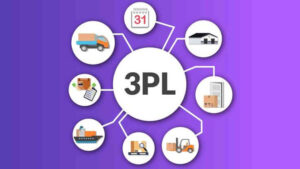
Choosing a logistics partner is one of the most important operational decisions you’ll make. Here’s a practical how to choose a 3PL checklist tailored to ecommerce:
Operational fit
- Do they handle your product type (fragile, liquid, battery, halal-sensitive handling, etc.)?
- Can they support bundles/kits and promo inserts?
- Do they have scanning at receiving, picking, and packing?
System fit
- Does their WMS integrate with your channels?
- Do they support multi-warehouse inventory view if you expand later?
- Can you export reports easily?
SLA and performance
- What’s their same-day dispatch rate?
- How do they handle stock discrepancies?
- What’s the claims process for lost/damaged parcels?
Cost clarity
- Can they provide a full order fulfillment costs breakdown?
- Are there minimums, peak surcharges, or long-term storage fees?
Location and coverage
- Where is the warehouse located relative to your customers?
- What courier partners do they use for Peninsular vs East Malaysia?
Communication and support
- Is there an assigned account manager?
- How are urgent issues handled (WhatsApp/phone/ticket system)?
Finally: don’t skip a trial run. Start with your top 20 SKUs and a controlled daily order volume, then scale once accuracy and dispatch times meet your target. In parallel, keep your shipping workflow efficient—many SMEs pair fulfillment improvements with EasyParcel’s Bulk Upload to stay fast during campaign spikes.
Best 3PL Providers for Small Business: What “Best” Really Means
Sellers often search “best 3PL providers for small business,” but “best” depends on your model:
- If you sell high SKU variety with low volume per SKU: you need strong WMS + careful picking.
- If you sell a few fast movers: you need speed, tight packing SOPs, and great carrier rates.
- If you run frequent bundles/live campaigns: you need kitting capacity and fast replenishment cycles.
- If you sell nationwide (including Sabah/Sarawak): you need proven lane performance and clear exception handling.
Instead of chasing a famous name, define your top 3 priorities (speed, accuracy, cost, flexibility, branded packaging) and select the provider that optimizes those.
Fulfillment Center or In-House? A Quick Decision Framework
Use this simple framework when deciding between self-fulfillment and a fulfillment center.
Consider in-house if:
- You ship fewer than ~20 orders/day consistently
- You sell highly customized products that change per order
- Your inventory is volatile and you need hands-on control daily
- You’re still validating product-market fit
Consider a fulfillment center if:
- You’re growing and need reliable dispatch during spikes
- You’re losing hours daily to packing and courier drop-offs
- Errors/late shipments are hurting reviews
- You want scalable SOPs without hiring a warehouse team
For many SMEs, the “middle path” is to keep slow movers or highly customized products in-house while outsourcing fast movers.
How EasyParcel Fits In (Without Overcomplicating Your Operations)
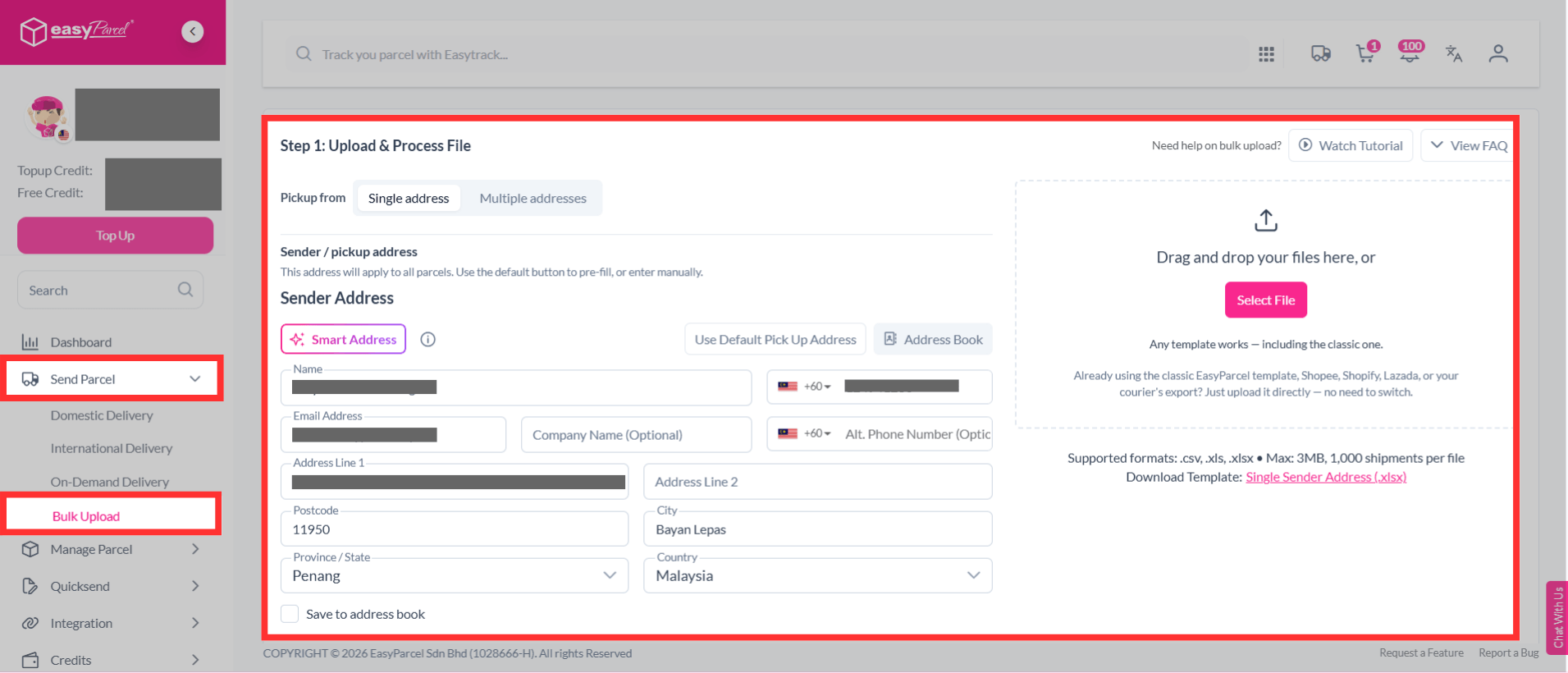
Even with a fulfillment partner, shipping decisions still matter—rates, courier choice, pickup scheduling, and tracking consistency can make or break customer satisfaction.
If you’re not ready to fully outsource yet, you can still improve operations by streamlining shipping:
- Compare courier options in one place
- Generate order in bulk
- Manage pickups more efficiently
- Standardize tracking updates
This is where EasyParcel’s Bulk Upload becomes especially useful for growing SME sellers. You can import many orders, create air waybill (AWB) at scale, and keep dispatch running smoothly during campaign spikes—whether you’re fulfilling in-house or running a hybrid model alongside a 3PL.
You may click here to learn more how to send bulk parcels with EasyParcel’s Bulk Upload.
Key Takeaways
A fulfillment center helps Malaysian online sellers scale by handling storage, picking/packing, dispatch, and returns—supported by solid inventory management systems WMS and operational SOPs. Understanding what is order fulfillment, the difference between fulfillment vs distribution center, and the true order fulfillment costs breakdown helps you choose wisely and avoid unpleasant surprises.
If you’re ready to streamline your shipping workflow, EasyParcel’s Bulk Upload lets you import multiple orders at once, create shipments in bulk, and reduce the time spent entering parcel details manually. Whether you’re fulfilling orders in-house or working with a 3PL, bulk uploading can help you process more shipments efficiently during busy periods.
Ready to simplify bulk shipping? Sign up for FREE today and enjoy a RM10 discount coupon on your first delivery.
FAQs
1. What is a fulfillment center?
A fulfillment center is a warehouse that manages the ecommerce order fulfillment process, including receiving inventory, storing products, picking and packing orders, shipping parcels, and handling returns.
2. What does a fulfillment center do?
A fulfillment center manages multiple stages of order fulfillment, from receiving and storing inventory to picking, packing, labeling, and handing parcels to courier partners. Some providers also offer kitting, quality checks, and returns processing.
3. What is the difference between a fulfillment center and a distribution center?
A fulfillment center mainly handles individual ecommerce orders sent directly to customers, while a distribution center is typically focused on moving larger shipments such as cartons or pallets to retailers, wholesalers, or other warehouses.
4. How much does fulfillment cost in Malaysia?
Fulfillment costs vary depending on the provider, order volume, storage requirements, product size, and services needed. Common charges include receiving, storage, picking and packing, packaging, returns processing, courier fees, and software or integration fees.